

School cleaning in London: the short answer
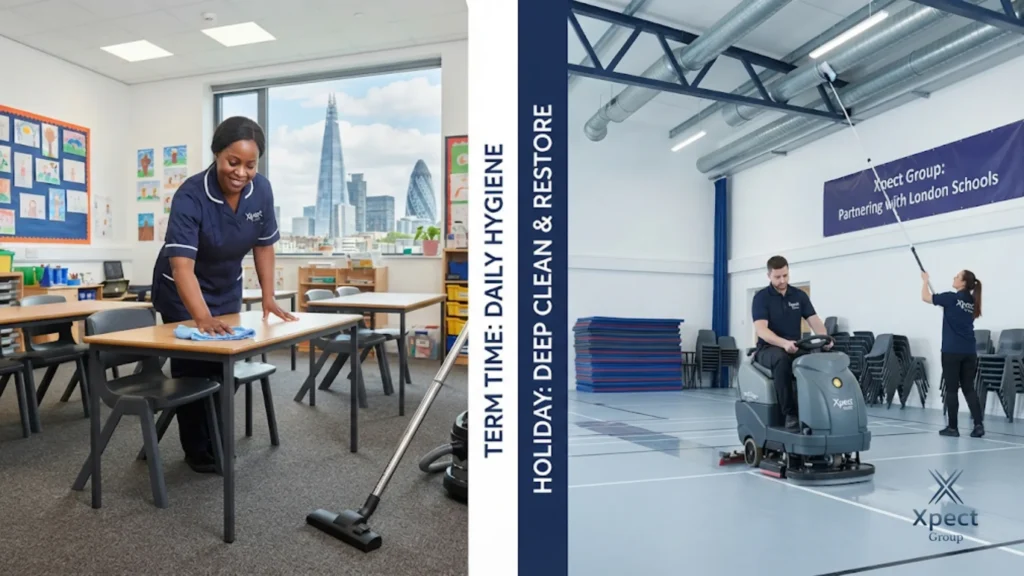
School cleaning works best as a yearly plan rather than a daily routine alone. During term time, classrooms, toilets, corridors, dining areas and offices are cleaned every school day after pupils leave. During holidays, especially summer, the site gets a deep clean: floors are machine scrubbed or refinished, carpets are cleaned, high areas are dusted, and kitchens, sports halls and specialist rooms are reset for the new term.
Why schools need a yearly plan
Schools are busy, shared spaces used by hundreds of children and adults. Daily cleaning keeps them hygienic, but the heavier work that keeps a building in good condition cannot happen while pupils are in. Holidays are the only real window, and they pass quickly once building works, maintenance and summer clubs are added.
Planning the year in advance means deep cleaning is booked, staffed and finished on time. Our article on why schools need more than just basic cleaning explains the wider benefits for attendance and wellbeing.
Daily term time cleaning
Daily cleaning normally happens after the school day, with some tasks during the day.
A day cleaner or caretaker can handle spills, sickness incidents and toilet checks while pupils are on site.
- Classrooms: floors vacuumed or mopped, desks and touch points wiped, bins emptied
- Toilets: cleaned and disinfected, consumables refilled, with a midday check
- Corridors and stairs: floors cleaned, handrails and door push plates wiped
- Dining hall: tables and floors cleaned after lunch service
- Offices and staff rooms: desks, kitchens and meeting areas cleaned
- Entrance and reception: glass, floors and visitor areas presentable each morning
Specialist rooms
Science labs, art rooms, design and technology workshops and food technology rooms all need tailored methods. Science benches and sinks need careful cleaning without disturbing equipment. Art rooms collect paint and clay, and food rooms must follow food hygiene practice. Agree with heads of department what cleaners can and cannot touch.
Holiday deep cleaning for London schools
Summer is the main opportunity. Book early, as cleaning contractors and equipment are in demand across London in late July and August. Coordinate with building contractors so floors are not refinished before dusty work takes place.
| Holiday | Typical deep clean focus |
|---|---|
| Summer | Full site deep clean, hard floor stripping and resealing, carpet extraction, high dusting, kitchen deep clean, sports hall floor care |
| Christmas | Toilets, kitchens, carpets in high traffic areas, entrance matting |
| Easter | Classrooms, corridors, windows and touch points |
| Half terms | Targeted areas, such as toilets, dining hall and changing rooms |
Sports halls and changing rooms
Sports halls often have sprung wooden or vinyl floors that need specialist care. Daily dust mopping protects the surface, and a periodic deep clean, often in the summer holiday, keeps line markings clear and the floor safe. Changing rooms need daily cleaning during term and a thorough deep clean in holidays to tackle grout and drains.
Infection control in schools
Illness spreads quickly in classrooms. The UK Health Security Agency publishes guidance for schools and childcare settings on managing infections, which covers cleaning during outbreaks. Practical steps include increasing touch point cleaning, extra toilet checks and careful cleaning after sickness incidents using appropriate products and protective equipment.
Safeguarding and site access
Anyone working in a school must follow the school’s safeguarding procedures. Agree how cleaners sign in, which areas they can access and when, and who supervises them. Cleaning after pupils leave reduces contact, but the arrangements should still be clear and written down.
Budgeting for the year
Schools often budget cleaning annually. Splitting the cost into daily cleaning, holiday deep cleans and reactive call outs helps leaders see where money goes. Ask providers to price holiday work separately so it can be planned and approved early.
Multi academy trusts and shared sites
Trusts with several schools benefit from consistent specifications across sites, with local adjustments. A single provider can share learning between schools, cover staff shortages and report in the same format, which makes comparison easy for trust leaders.
Questions to ask before hiring
For a fuller list, see our guide on what schools need to know before hiring.
- Do you have experience cleaning schools of our size and age range?
- How do you handle safeguarding and site access?
- Can you plan and staff a summer deep clean around building works?
- How will standards be checked and reported?
- What happens when a cleaner is off sick?
Nurseries and early years settings
Nurseries and early years settings need extra care. Young children put toys in their mouths, sit on floors and touch everything. Toys, mats, changing areas and toilets need frequent cleaning, often during the day by staff and thoroughly each evening by the cleaning team. Products should be safe for children’s environments and stored securely. Baby rooms and sleep areas need particular attention to floors and soft furnishings.
Colleges and sixth forms
Colleges have longer opening hours, evening classes and more adult learners. Cleaning often needs to work around evening timetables, with some areas cleaned early in the morning. Workshops for construction, motor vehicle or hair and beauty courses need methods suited to the work carried out there. Libraries and learning resource centres need quiet daytime cleaning.
Kitchens and dining areas
School kitchens are usually managed by a catering provider or the local authority, who are responsible for food safety in the kitchen itself. The cleaning team usually covers dining areas, servery fronts and floors outside the kitchen. Clarify responsibilities so nothing is missed, particularly for deep cleaning during holidays, when kitchens are often cleaned from top to bottom.
Sustainability in schools
Many schools want to reduce their environmental impact and teach pupils about sustainability. Cleaning can support this with concentrated products, refillable bottles, microfibre cloths that reduce water and chemical use, and good recycling practice. Pupils notice when the school takes these steps, and it reinforces what they learn in class.
Communicating with staff and parents
Schools often get questions from parents about cleaning, especially during outbreaks of illness. A short summary of your cleaning arrangements, such as daily cleaning, extra touch point cleaning during outbreaks and holiday deep cleans, can be shared in newsletters or on the website. It reassures parents and shows that hygiene is taken seriously.
Measuring results
Simple monthly checks against the specification help keep standards high. The business manager or site manager can walk the school with the cleaning supervisor, score key areas and agree actions. Over the year, the results show whether daily cleaning is consistent and whether holiday deep cleans are making a lasting difference.
Trends in school cleaning for 2026
Schools are paying closer attention to air quality and ventilation, which brings vents, radiators and high surfaces into the cleaning plan more often. Lettings of sports halls and classrooms in evenings and weekends are growing as a source of income, so cleaning must work around community use as well as the school day. More trusts are using digital logs and audit apps to compare standards across sites. Eco friendly products and refill systems are also popular, often linked to the school’s own sustainability goals.
Building a yearly cleaning calendar
Map out the year in the summer term. Mark term dates, exams, events, lettings and planned building works. Then add daily cleaning, half term targeted cleans, the Christmas and Easter cleans and the summer deep clean. Share the calendar with your cleaning provider and site team, and review it each term. A clear calendar avoids clashes and makes sure nothing is forgotten.
A sample school cleaning calendar for London schools
A yearly calendar helps business managers book work early and spread costs. The outline below suits most primary and secondary schools, though each site will need its own adjustments.
Share the calendar with the head teacher and site manager at the start of the year. When everyone knows when deep cleans happen, it is easier to plan building work, lettings and events around them.
- Autumn half term: deep clean toilets, wipe high level areas and clean carpets in high traffic rooms.
- Christmas holiday: sports hall floor clean, kitchen deep clean and window cleaning.
- February half term: classroom furniture clean and washroom descaling.
- Easter holiday: carpet cleaning across the school and external areas.
- May half term: hall and dining area refresh before exam season ends.
- Summer holiday: full deep clean of every room, floor stripping and resealing.
How London schools can control cleaning costs
School budgets are tight, so cleaning has to deliver good value. One useful step is to review cleaning hours against how rooms are actually used. Rooms that are empty on certain days may need a lighter clean, freeing time for toilets and dining areas.
Another step is to combine periodic tasks into fewer, larger visits during holidays. This reduces call out costs and causes less disruption. Schools in a trust can also share a provider and agree a common specification, which often makes pricing simpler.
Avoid cutting toilet and dining area cleaning, as these areas affect pupil health and parent opinion the most.
School cleaning in London: working around lettings and events
Many London schools earn income by letting halls, sports facilities and classrooms in the evenings and at weekends. Each letting adds wear and needs cleaning afterwards.
Agree with your provider who cleans after each letting and how the cost is covered. Some schools add a cleaning charge to the hire fee. Clear rules protect the school day, because pupils should never arrive on Monday to a hall left untidy from a weekend event.
Checking the quality of school cleaning
Business managers rarely have time to inspect every room, so a simple checking routine helps. Pick five rooms at random each week, including at least one toilet block, and score them against the specification. Share the results with your provider and agree actions for anything below standard.
Teachers and site staff are a useful source of feedback too. A short form or shared inbox lets them report issues quickly, and patterns soon show where the routine needs changing.
How Xpect Group can help
We provide school cleaning in London and the surrounding counties for primary schools, secondary schools, colleges and nurseries. We plan daily cleaning and holiday deep cleans as one yearly programme. To discuss your school, arrange a site visit.
Frequently asked questions
When should a school deep clean be booked?
Book the summer deep clean in the spring term, so dates, staff and equipment are confirmed before the holiday starts.
Can cleaning happen during the school day?
Yes, for toilet checks, spills and lunchtime cleaning. Most cleaning happens after pupils leave.
How are sports hall floors cleaned?
With daily dust mopping and a periodic deep clean using methods suited to sprung or vinyl floors, usually in the summer holiday.
Who cleans the school kitchen?
Usually the catering provider is responsible for the kitchen. The cleaning team covers dining areas and surrounding floors, and responsibilities should be agreed in writing.
Does cleaning need to change when a school hires out its halls?
Yes. Lettings add extra use, so toilets, halls and entrances may need cleaning after evening or weekend bookings as well as after the school day.
How should cleaners deal with sickness in a classroom?
Use a spill kit with suitable protective equipment, absorb and remove the waste, clean the area with detergent and then disinfect it, and dispose of the waste safely. Ventilate the room and record the incident.
How much does school cleaning cost?
It depends on the size of the site, the number of toilets and specialist rooms, opening hours and lettings. Daily cleaning and holiday deep cleans are usually priced separately so they can be budgeted clearly.