

What a shopping centre cleaning company does
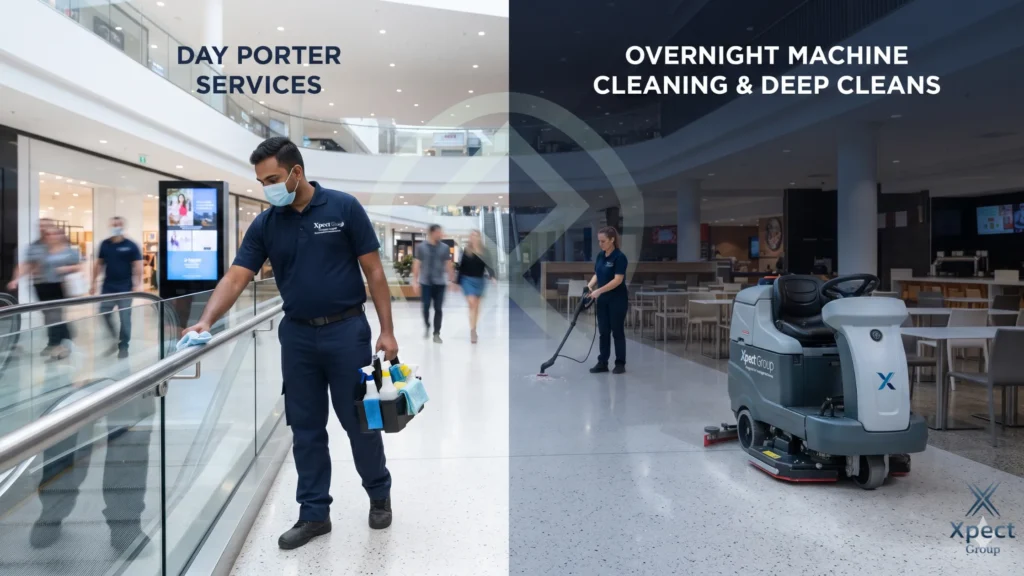
A shopping centre cleaning company usually runs two operations at once: a daytime team of porters who keep malls, washrooms and food courts presentable while shoppers are in, and an overnight or early morning team that carries out machine cleaning, deep cleans and periodic work. The contract should set clear standards for each area, response times for spills, staffing levels for peak days and a reporting routine for the centre management team.
What makes shopping centres different
Shopping centres are public spaces with private landlords. Footfall can swing from quiet weekday mornings to packed Saturday afternoons and the weeks before Christmas. Common areas are seen by every visitor, and a single dirty washroom can colour how people feel about the whole centre.
Unlike a single shop, a centre has many stakeholders. Tenants expect the mall outside their unit to be clean, the landlord expects value for the service charge, and shoppers expect safety and comfort. A cleaning partner has to work for all of them.
Daytime porter cover
Day porters are the visible face of cleaning. They patrol set routes, respond to spills and keep high use areas in order.
Response times matter. Many centres set a target for spills on main malls, recorded through radios or a reporting app. Porter numbers should increase for weekends, school holidays and the Christmas period.
- Litter picking and bin emptying on malls and entrances
- Spill response, with wet floor signs and quick drying to prevent slips
- Washroom checks at set intervals, with consumables refilled
- Food court table clearing and wiping between diners
- Glass doors, lift buttons and escalator handrails wiped regularly
- Reporting faults such as broken tiles or leaking ceilings
Overnight and early morning cleaning
When the centre closes, the heavier work begins. Large floor areas are machine scrubbed, washrooms are deep cleaned and food courts are reset for the next day.
Periodic tasks, such as high level glazing, atrium cleaning, chewing gum removal and jet washing of entrances, are scheduled in advance and often carried out at night with access equipment.
| Area | Typical overnight tasks |
|---|---|
| Malls | Machine scrub or burnish, entrance matting vacuumed |
| Washrooms | Full clean and disinfection, descaling, floor scrub |
| Food court | Tables, chairs and floor deep cleaned, bins washed |
| Service corridors | Swept and mopped, waste areas cleared |
| Car parks | Litter picked, stairwells and lifts cleaned |
Washrooms set the tone
Washrooms are where shoppers judge a centre most harshly. They need regular checks, reliable consumables and quick action when something breaks. A visible cleaning log reassures visitors, and feedback devices can flag problems in real time where centres use them.
Accessible toilets and baby change facilities should be on the same frequency as the main washrooms, if not more frequent.
Seasonal planning
Footfall patterns change through the year. Summer brings more food and drink waste and stickier floors, which we cover in our article on high traffic summer months. Autumn and winter bring wet weather, mud and leaves at entrances, so matting and floor drying become priorities. The weeks before Christmas usually need the highest porter numbers of the year.
A good cleaning company plans these changes with the centre team in advance, rather than reacting when standards slip.
Sustainability and waste
Centres increasingly report on waste and recycling. The cleaning team can support this by separating waste streams correctly, keeping recycling points clean and reporting volumes where required. Using concentrated products and microfibre also reduces water and chemical use.
What should be in the contract
Key performance indicators work best when they are few and meaningful. Washroom audit scores, response times and complaint numbers tell centre managers more than long lists of minor measures.
- A specification by area, with frequencies and standards
- Staffing levels for weekdays, weekends and peak periods
- Response times for spills and urgent requests
- Monthly reporting, including audit scores and incidents
- Periodic tasks with a planned calendar
- A named account manager and on site supervisor
- Clear arrangements for consumables and equipment
Retail parks and smaller centres
Not every centre is a large covered mall. Retail parks, high street arcades and neighbourhood centres need many of the same services on a smaller scale, such as litter picking, washroom cleaning and periodic jet washing. The principles are the same: clear standards, reliable cover and regular reporting.
Floors: the biggest single task
Mall floors take more wear than almost any other commercial surface. Natural stone, porcelain and terrazzo are common, and each needs its own care. Daily scrubber dryer cleaning removes grit before it scratches the surface, while periodic work such as diamond polishing or resealing restores the finish. Entrance matting is the first line of defence, trapping water and grit before it reaches the main floor.
Chewing gum is a constant problem on malls and entrances. Regular removal with steam equipment keeps it under control, and doing it at night avoids disruption. Agree a frequency in the contract rather than leaving it to occasional requests.
Food courts and seating areas
Food courts are where cleanliness is most visible at peak times. Tables need clearing and wiping between diners, floors need spot cleaning for spills, and bins need emptying before they overflow. Waste separation points should be clean and clearly signed, and tray returns cleared regularly.
After closing, the food court needs a full clean of tables, chairs, floors and bins. Grease and food residue build up quickly, so periodic deep cleaning of floors and seating is important.
Car parks, service yards and external areas
External areas are often overlooked but shape first impressions. Multi storey car parks need regular litter picking, stairwell and lift cleaning, and periodic jet washing. Pay stations and lift buttons are high touch points. Service yards and bin stores should be kept tidy to reduce pests and odours. Pavements and entrances benefit from periodic jet washing, particularly in summer.
Working with tenants and security
Cleaning teams work alongside security, maintenance and tenant teams. Shared radios or apps help everyone report and respond to issues quickly. Regular meetings with centre management keep everyone aligned on events, promotions and seasonal changes. Tenants appreciate being told when deep cleaning or jet washing will take place near their units.
Handling incidents
Spills, sickness, broken glass and flooding all happen in busy centres. The cleaning team should have a clear process: secure the area, put out signage, clean using the right method and record the incident. For bodily fluids, cleaners should use appropriate protective equipment and products. Fast, safe responses reduce slip risks and complaints.
Reviewing performance
Monthly reviews with the centre manager keep the contract on track. Look at audit scores, response times, complaints and upcoming events. Agree any changes to staffing or tasks, and record decisions. Over time, the data shows where effort should increase and where hours can be moved to better use.
Trends in shopping centre cleaning for 2026
Centres are using technology to direct cleaning where it is needed. Footfall counters and washroom feedback buttons let supervisors send porters to busy areas rather than following fixed routes alone. Robotic scrubber dryers are appearing on large malls overnight, freeing staff for detailed tasks such as washrooms and glass. Many landlords now report on sustainability, so waste data, water use and product choice are becoming part of cleaning reviews. Centres are also adding more leisure, food and community uses, which brings longer opening hours and new cleaning demands.
Choosing the right shopping centre cleaning company
When comparing providers, look beyond the price. Ask how they would staff your busiest Saturday, how they recruit and keep porters, and how quickly they can add cover for events. Ask to see sample reports and speak to the people who would supervise your site. A provider who understands retail footfall will plan for it, not react to it.
How a shopping centre cleaning company prices a contract
Pricing starts with a site survey. The contractor measures floor areas, counts washrooms and notes entrances, food courts, car parks and service yards. They then look at trading hours and footfall patterns to work out how many porters are needed at each point of the day.
Most contracts are priced on labour hours, with machines, consumables and supervision added on top. Some include a fixed price for periodic tasks such as floor sealing, high level cleaning or window cleaning. Others price these separately so the centre can schedule them as budgets allow.
When you compare quotes, check that each one covers the same hours and the same tasks. A low price often means fewer porters at busy times, which shows up quickly in washrooms and food courts.
Key performance indicators for shopping centre cleaning
A clear set of measures keeps both sides focused. Choose a small number that matter to shoppers and tenants, and review them every month.
Keep the results visible to the centre management team. When a measure slips, agree an action with a date rather than simply noting it in a report.
- Washroom audit scores at peak trading times.
- Response time to spills and incidents reported by security.
- Food court table turnover and cleanliness at lunchtime.
- Tenant feedback on service yards and back corridors.
- Completion of scheduled periodic tasks each month.
Mobilising a new shopping centre cleaning contract
The first weeks of a contract decide how it will run for years. A good shopping centre cleaning company will plan the start in detail. That includes staff transfer where it applies, uniform and equipment delivery, and induction with security and centre management.
Expect a named manager on site every day during the first month. They should walk the centre at opening, at lunchtime and at closing, and report what they find. By the end of the month, the routine should be settled and the audit scores should be steady.
How Xpect Group can help
We clean shopping centres, retail parks and retail units across London and the South East. Our shopping centre cleaning service combines daytime porter cover with overnight cleaning and planned periodic work, with reporting your management team can use. If you are reviewing your cleaning contract, speak to us about a site walk.
Frequently asked questions
How many cleaners does a shopping centre need?
It depends on the floor area, footfall, number of washrooms and opening hours. Staffing should be planned by area and increased for weekends and peak seasons.
Should cleaning be done during opening hours?
Yes, for porter duties such as spills, washrooms and litter. Machine cleaning and deep cleans are best done overnight or before opening.
Who cleans inside individual shop units?
Usually the tenant arranges their own cleaning. The centre’s contractor covers common areas, although some centres offer unit cleaning as an extra service.
How often should a shopping centre floor be machine cleaned?
Most busy malls are machine cleaned every night, with periodic restoration such as polishing or resealing a few times a year depending on the surface.
Are cleaning robots used in shopping centres?
Some large centres use robotic scrubber dryers for open floor areas overnight, with staff focusing on detailed work such as washrooms and glazing.