

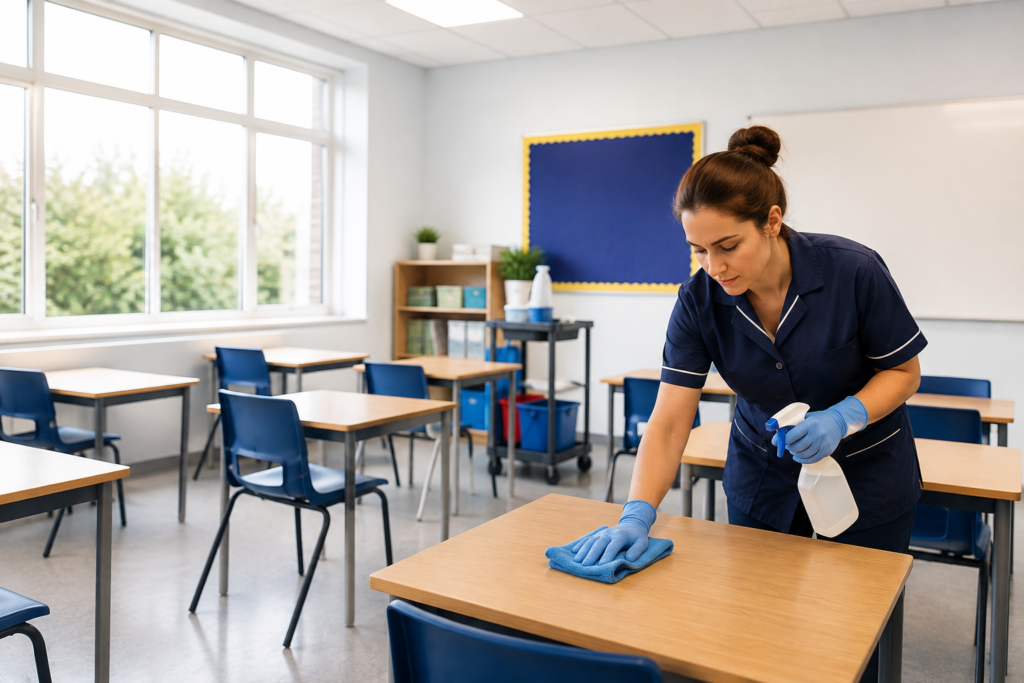
Keeping a school clean is an important part of creating a safe, comfortable and welcoming environment for pupils, teachers, support staff and visitors. Schools are busy places where hundreds of people may use the same classrooms, corridors, toilets, dining areas and shared facilities every day.
Because of this high level of activity, school cleaning requires more than basic dusting and vacuuming. A good cleaning programme needs to cover everyday hygiene, high-touch surfaces, washrooms, classrooms, communal areas and specialist spaces such as sports halls and dining areas.
If you are a headteacher, school business manager, bursar or facilities manager looking for a cleaning provider, it is important to understand what a professional service should include and what to check before signing a contract.
This guide explains what to look for when choosing school cleaning services in London and across the UK.
What Does Professional School Cleaning Include?
Professional cleaning in schools should be planned around the way the building is used. Different areas have different cleaning requirements, so a school should have a clear cleaning schedule rather than relying on the same routine everywhere.
A typical school cleaning service may include:
Classroom Cleaning
Classrooms are used throughout the school day and can quickly collect dust, dirt and general waste.
Regular cleaning may include:
- Vacuuming or mopping floors
- Cleaning desks and accessible surfaces
- Emptying bins
- Removing visible marks
- Cleaning doors and handles
- Dusting furniture
- Cleaning high-touch areas
Teachers and pupils may also need to follow simple housekeeping practices, such as keeping desks clear and disposing of waste correctly.
Washroom Cleaning
School toilets require particular attention because they are heavily used during the day.
Cleaning can include:
- Cleaning toilets and urinals
- Cleaning sinks and taps
- Cleaning mirrors
- Disinfecting high-touch surfaces
- Mopping floors
- Emptying waste bins
- Checking hygiene supplies
The cleaning frequency should reflect the number of pupils and staff using the facilities.
Corridors and Shared Areas
Corridors, stairways and communal areas experience constant foot traffic. Dirt from outside can easily be brought into these spaces, especially during wet weather.
These areas may require regular vacuuming, sweeping, mopping and spot cleaning.
Dining Areas
Dining halls and eating areas can quickly develop food spills, crumbs and waste.
A suitable cleaning programme should cover tables, chairs, floors, waste areas and other accessible surfaces. Where food preparation areas are included within the contract, cleaning should follow the appropriate procedures for that environment.
Sports Halls and Changing Rooms
Sports facilities have their own cleaning requirements because they are exposed to mud, sweat and frequent contact.
Cleaning may include floors, changing areas, toilets, showers and other frequently touched surfaces.
Staff Rooms and Offices
Staff rooms, reception areas and administrative offices also need regular attention. These areas contribute to the overall appearance of the school and should be included in the cleaning schedule.
How Often Should a School Be Cleaned?
The right frequency depends on the size of the school, number of pupils and staff, type of facilities and daily footfall.
For many schools, cleaning takes place every day because classrooms, toilets and shared areas are used continuously.
However, not every area needs the same level of attention.
Daily Cleaning
Daily cleaning commonly focuses on:
- Classrooms
- Toilets
- Corridors
- Reception areas
- Staff rooms
- Dining areas
- High-touch surfaces
- Waste removal
Periodic Cleaning
Some tasks can be completed weekly, monthly or at another agreed interval.
These may include:
- Detailed dusting
- Internal glass cleaning
- Hard-to-reach areas
- Furniture cleaning
- Detailed floor maintenance
- Less frequently used rooms
Holiday Deep Cleaning
School holidays provide a useful opportunity for more intensive cleaning because classrooms and other areas may be empty.
A holiday deep clean can include carpets, upholstery, floors, high-level surfaces, kitchens, washrooms and other areas that require additional attention.
Daily School Cleaning Checklist
A simple checklist helps school managers understand what should be covered during routine cleaning.
Classrooms
- Floors vacuumed or mopped
- Desks and accessible surfaces cleaned
- Bins emptied
- Doors and handles cleaned
- Visible marks removed
- High-touch areas checked
Washrooms
- Toilets cleaned
- Sinks and taps cleaned
- Mirrors cleaned
- Floors mopped
- Touchpoints disinfected
- Waste removed
- Hygiene supplies checked
Communal Areas
- Corridors cleaned
- Stairways cleaned
- Reception cleaned
- Shared surfaces wiped
- Bins emptied
- Visible spills removed
Dining Areas
- Tables cleaned
- Chairs cleaned
- Floors cleaned
- Waste removed
- Frequently touched surfaces cleaned
The exact checklist should be adapted to the school’s building, facilities and cleaning contract.
How to Choose the Right School Cleaning Company
Choosing a school cleaning company is an important decision because cleaners may work around pupils, teachers and sensitive school facilities.
Do not base your decision on price alone. Consider the company’s experience, procedures, staff and ability to provide consistent service.
Check Relevant Experience
Ask whether the provider has experience working in schools or similar educational environments.
Schools have different requirements from ordinary offices. A cleaning provider should understand the importance of safeguarding, hygiene, health and safety, access control and working around school timetables.
Ask About Staff Vetting
Schools should make sure cleaning staff are appropriately vetted for the duties they will carry out and the level of access they have to pupils.
Ask the provider about its recruitment, background-checking and safeguarding procedures before staff are assigned to your school.
Check Health and Safety Procedures
Cleaning products and equipment need to be used and stored safely.
Ask the provider about:
- Risk assessments
- COSHH procedures
- Product handling
- Chemical storage
- Staff training
- Equipment safety
- Incident procedures
Ask About Staff Training
Good cleaners should understand how to clean different surfaces and areas correctly. They should also know how to use cleaning equipment and products safely.
Check References
A reputable provider should be able to demonstrate previous experience and provide suitable business references where appropriate.
Speaking to existing or previous clients can give you a better understanding of reliability, communication and cleaning standards.
What Should You Check Before Hiring a School Cleaning Company?
Before signing a contract, ask potential providers some straightforward questions.
Who will manage the cleaning team?
You should have a clear point of contact if there is a problem or you need to change the schedule.
What is included in the contract?
Make sure you understand exactly which rooms, tasks and services are included.
How often will each area be cleaned?
A good specification should distinguish between daily, weekly and periodic tasks.
What happens if a cleaner is absent?
Find out whether the company provides replacement staff so that cleaning standards do not suddenly drop.
Can the service change when school requirements change?
Schools may need additional cleaning for events, examinations, holidays or unexpected situations. Flexibility can be valuable.
How Much Do School Cleaning Services Cost?
There is no standard price for school cleaning because every school has different requirements.
The cost can depend on several factors.
Size of the School
A larger school with more classrooms, corridors and facilities will generally require more cleaning time and staff.
Number of Pupils and Staff
Higher occupancy can increase the amount of waste, foot traffic and use of washrooms and shared facilities.
Cleaning Frequency
Daily cleaning will normally have a different cost from a service carried out only a few times a week.
Facilities
Sports halls, changing rooms, dining areas, kitchens, nurseries and boarding facilities can all affect the scope of work.
Location
Cleaning costs can vary between London and other parts of the UK due to differences in labour, transport and operating costs.
Specialist Cleaning
Carpet cleaning, upholstery cleaning, window cleaning and intensive deep cleaning may be charged separately from routine services.
For these reasons, it is better to request a tailored quotation rather than relying on a generic price.
A good quotation should clearly explain what is included, how frequently the work will be carried out and whether additional services have separate charges.
State School Cleaning Services in London
Schools in London can face practical challenges that may affect their cleaning arrangements.
Some schools operate in busy areas with restricted vehicle access, limited parking and tight schedules. Others may operate across multiple buildings or sites.
A cleaning provider working in London should be able to plan around:
- School opening and closing times
- Restricted access
- Security procedures
- Term dates
- Staff and pupil movement
- School events
- Holiday cleaning
- Multiple-site requirements where applicable
The provider should also be able to maintain consistent standards rather than allowing service quality to vary between different visits or locations.
Private and Independent School Cleaning
Independent schools may have additional presentation requirements because pupils, parents, prospective families and visitors regularly interact with the school environment.
Areas such as reception rooms, halls, dining spaces and meeting rooms may need particular attention.
Some independent schools may also have:
- Boarding houses
- Larger sports facilities
- Specialist teaching areas
- Dining facilities
- Events and open days
- Extensive outdoor areas
The cleaning programme should therefore reflect the school’s individual facilities rather than relying on a standard package.
School Cleaning in London vs Other UK Regions
The basic principles of school cleaning remain the same across the UK, but the practical requirements can differ.
London schools may need to consider transport, parking, building access and densely populated areas. Schools outside London may have larger grounds, different building layouts or additional facilities.
The important point is to choose a provider that can work around your school’s specific requirements.
A good cleaning company should be able to provide a clear schedule, reliable staff and consistent communication regardless of where the school is located.
Why Holiday Deep Cleaning Matters
School holidays are an excellent opportunity to complete cleaning tasks that are difficult to carry out during term time.
With classrooms and shared areas less occupied, cleaners can spend more time on detailed work.
Holiday cleaning may include:
- Carpet cleaning
- Upholstery cleaning
- Detailed floor cleaning
- High-level dusting
- Deep cleaning washrooms
- Detailed kitchen cleaning
- Cleaning behind accessible furniture
- Internal glass cleaning
- Intensive cleaning of communal areas
These tasks can help refresh the school before pupils and staff return.
Why Choose a Professional School Cleaning Company?
Managing school cleaning internally can place additional pressure on administrative and facilities teams. Someone needs to organise staff, maintain cleaning schedules, order supplies and monitor standards.
A professional provider can take responsibility for these tasks while delivering a structured cleaning programme.
When choosing a provider, look for a company that can offer:
- Trained cleaning staff
- Appropriate staff vetting
- Clear cleaning schedules
- Regular quality checks
- Flexible cleaning arrangements
- Reliable communication
- Experience with commercial and educational environments
At Xpect Group, cleaning programmes can be designed around the individual requirements of each school. The aim is to provide a reliable service that fits around the school day, term calendar, facilities and expected cleaning standards.
For schools looking for a long-term cleaning partner, a tailored approach can provide greater consistency than a one-size-fits-all cleaning package.
Frequently Asked Questions
How often should a school be cleaned?
Most schools require regular cleaning throughout the week, with classrooms, washrooms, corridors and other high-use areas receiving frequent attention. The exact schedule depends on pupil numbers, facilities and daily use.
What should school cleaning include?
A school cleaning programme can include classrooms, toilets, corridors, reception areas, staff rooms, dining areas, sports facilities and other shared spaces. The exact tasks should be clearly listed in the cleaning specification.
How much does school cleaning cost?
The cost depends on the size of the school, cleaning frequency, number of facilities, location, staffing requirements and any specialist services. A tailored quotation is the best way to establish the expected cost.
What should I ask a school cleaning company before hiring?
Ask about experience, staff vetting, training, health and safety procedures, cleaning schedules, quality checks, replacement staff and what is included in the contract.
Can schools have deep cleaning during holidays?
Yes. School holidays are often a convenient time for more detailed cleaning because classrooms and communal areas are less occupied. Tasks such as carpet cleaning, floor treatment and intensive washroom cleaning can be scheduled during these periods.
Is school cleaning different from office cleaning?
Yes. Although some basic tasks are similar, schools have higher levels of daily foot traffic and additional considerations around pupils, safeguarding, washrooms, dining facilities, sports areas and school schedules.
Choose the Right Cleaning Partner for Your School
A clean school provides a better environment for pupils, staff and visitors. The most effective approach is to create a cleaning programme based on how the school is used, rather than choosing a standard schedule without considering the building and its facilities.
From everyday classroom and washroom cleaning to holiday deep cleaning, the right school cleaning services should provide consistent standards, reliable staff and clear communication.
If your school is looking for professional cleaning support in London or elsewhere in the UK, Xpect Group can create a cleaning programme around your school’s size, schedule and individual requirements.
Request a tailored quote for your school cleaning requirements today.