
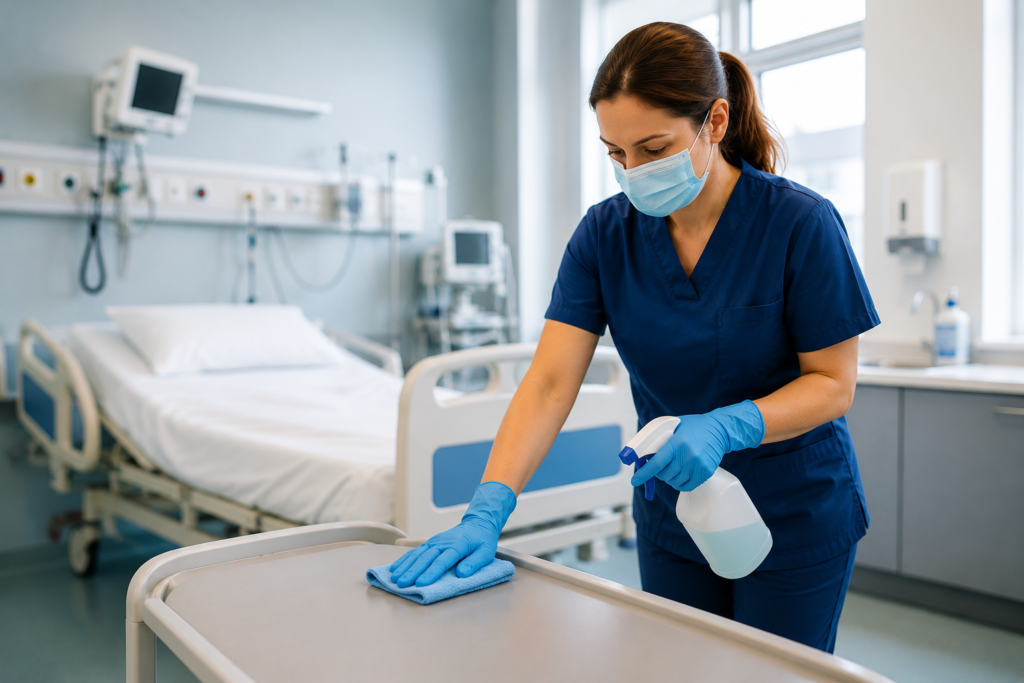
Cleanliness in a healthcare setting isn’t optional. It’s a legal requirement, a safety measure, and a direct line of protection for patients, staff, and visitors. Yet many people outside the industry assume hospital cleaning is much the same as cleaning an office or a shop. It isn’t. Hospital cleaning services follow a completely different set of rules, standards, and processes — and getting them wrong carries far higher risks.
This guide breaks down what infection control actually means in practice, what separates a proper hospital cleaning company from a general cleaner, and what to look for if you’re responsible for a clinic, surgery, or care setting.
What Does Infection Control Actually Mean?
Infection control is the set of practices used to stop harmful bacteria, viruses, and other pathogens from spreading between patients, staff, and surfaces. In a healthcare environment, this covers three distinct levels:
- Cleaning – removing visible dirt, dust, and organic matter from surfaces
- Disinfection – using approved chemical agents to kill most bacteria and viruses on a surface
- Sterilisation – eliminating all microorganisms, typically required for surgical instruments and high-risk equipment
A facility isn’t “medically clean” just because it looks tidy. True hygiene compliance means all three levels are addressed correctly, in the right order, with the right products, every single time.
Why Medical Facility Cleaning Is Different From Standard Cleaning
Here’s the honest answer: standard commercial cleaning simply isn’t built for clinical environments. There are a few key reasons why medical facility cleaning services need a specialist approach.
Different products for different risks. Hospital-grade disinfectants aren’t the same as the products used in an office kitchen. They need to be effective against specific pathogens while still being safe on medical surfaces and equipment.
Colour-coded equipment. Professional healthcare cleaning teams use colour-coded cloths and mops for different zones — one colour for patient rooms, another for washrooms, another for kitchens — to stop cross-contamination between areas.
High-touch point protocols. Door handles, bed rails, light switches, and reception desks get touched constantly and need cleaning far more often than a standard wipe-down schedule allows.
Regulatory compliance. Healthcare settings in the UK are expected to meet NHS and CQC cleanliness standards. That means documented processes, audit trails, and consistent quality checks — not just a cleaner turning up with a mop.
The Areas That Need the Most Attention
Not every part of a medical facility carries the same level of risk. A specialist clinical cleaning programme typically prioritises:
- Patient rooms and treatment areas — cleaned and disinfected between every patient where required
- Operating theatres and ICU units — treated as the highest-risk zones, with stricter protocols
- Waiting rooms and reception — high footfall areas where germs spread easily between visitors
- Washrooms — a common source of cross-contamination if not cleaned properly
- Staff areas and corridors — often overlooked, but still part of the wider infection control chain
A good cleaning partner won’t treat these as identical tasks. Each zone gets its own process, frequency, and product selection based on its actual risk level.
What Good Medical Centre Cleaning Looks Like Day to Day
If you’re assessing a provider for your clinic or medical centre cleaning, here’s what a properly run service should include:
- A documented cleaning schedule for each area of the facility
- Hospital-grade, approved disinfectants used correctly for each surface type
- Staff trained specifically in healthcare hygiene, not just general cleaning
- Supervisors who inspect completed work against a clear checklist
- Flexible scheduling that works around patient care, including out-of-hours options
- Full traceability, so you can show compliance if you’re ever audited
If a provider can’t clearly explain their process for any of the above, that’s worth treating as a red flag.
Choosing the Right Hospital Cleaning Company
Not every cleaning company understands healthcare. When you’re comparing options, ask these questions:
- Are your staff trained specifically in infection control, not just general cleaning?
- Do you follow NHS and CQC cleaning standards?
- What disinfectants do you use, and are they approved for clinical settings?
- Can you provide flexible scheduling that fits around patient care hours?
- Do you offer both routine cleaning and deep cleaning when needed?
At Xpect Group, our approach to healthcare and medical cleaning is built around exactly these principles. Our teams are trained, insured, and background-checked, and we use hospital-grade disinfectants alongside eco-friendly products where appropriate — so your facility stays compliant without unnecessary environmental impact.
Beyond the Ward: Related Facilities That Need the Same Standards
Infection control isn’t limited to hospitals and GP surgeries. Pharmaceutical sites, laboratories, and research facilities carry similar — sometimes stricter — hygiene requirements. If your organisation manages both clinical and lab spaces, it’s worth reviewing our pharmaceutical cleaning services too, which follow Good Manufacturing Practice guidelines for contamination control.
And if your medical centre shares a building with office space, don’t overlook it — shared corridors, reception areas, and staff rooms still need to meet a consistent hygiene standard across the whole site.
Choosing a Hospital Cleaning Company You Can Trust
Infection control isn’t a box-ticking exercise. It’s the difference between a facility that genuinely protects patients and one that only looks clean on the surface. Proper hospital cleaning requires trained staff, the right products, clear protocols, and consistent quality checks — not a generic cleaning contract.
If you manage a clinic, surgery, or healthcare facility and want a cleaning partner who understands what’s actually at stake, get in touch with Xpect Group for a consultation. We’ll talk through your facility’s specific needs and build a cleaning programme around them, not the other way round.