
What daily office cleaning should include
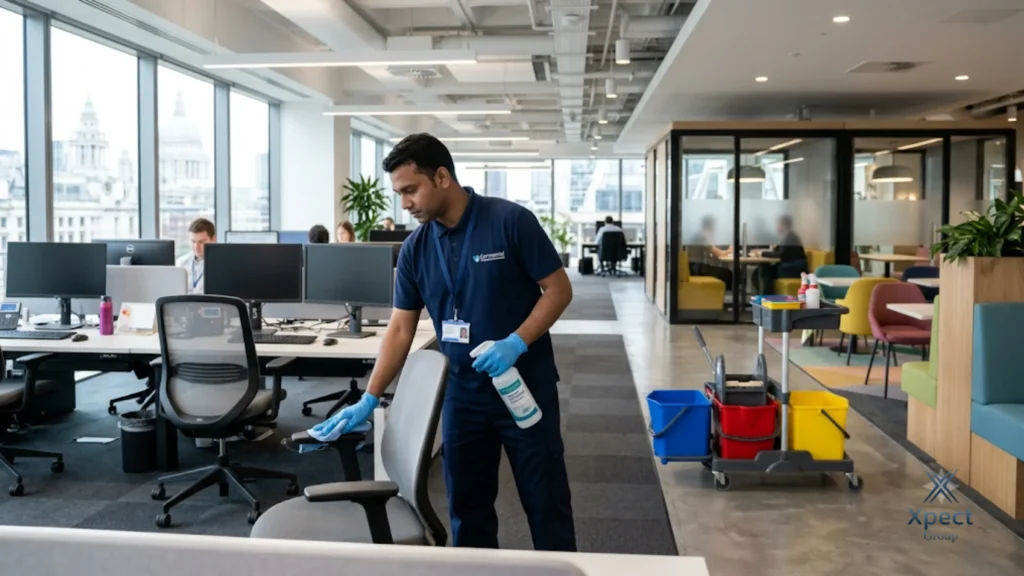
Daily office cleaning should cover kitchens, toilets, bins, floors, desks and common touch points every working day, with meeting rooms and reception reset for the morning. Weekly tasks such as dusting, glass cleaning and deeper kitchen cleans sit on top, and periodic work such as carpet cleaning and high dusting is scheduled a few times a year. Most offices are cleaned in the evening, but early morning and daytime cleaning are common too.
Why daily cleaning matters
Offices have changed. Hybrid working means desks are shared, attendance peaks midweek and teams expect the office to be worth the commute. A clean, fresh space is part of that. Daily cleaning also meets the legal duty under the Workplace (Health, Safety and Welfare) Regulations 1992 to keep workplaces, furniture and fittings sufficiently clean.
If you are deciding between daily cleaning and occasional deep cleans, our comparison of daily and deep cleaning sets out the differences.
The daily office cleaning checklist
Hot desks need particular care. If desks are shared, agree that cleaners will wipe every clear desk each night, and ask staff to leave desks clear so this can happen.
| Area | Daily tasks |
|---|---|
| Kitchens | Worktops, sinks, taps, appliance fronts, tables, floor; dishwasher loaded or emptied if agreed |
| Toilets | Toilets, urinals, sinks, mirrors, floors, consumables refilled |
| Desks | Clear desks wiped, phones and keyboards cleaned where agreed |
| Touch points | Door handles, light switches, lift buttons, handrails |
| Floors | Hard floors mopped, carpets vacuumed in walkways and used areas |
| Bins | General waste and recycling emptied, liners replaced |
| Meeting rooms | Tables wiped, chairs straightened, screens dusted |
| Reception | Desk, seating, glass doors and entrance mat |
Weekly additions
- Dusting of shelves, ledges, picture frames and partitions
- Internal glass partitions and doors cleaned
- Kitchen appliances cleaned inside, such as microwaves and fridges by agreement
- Full vacuum of carpets, including under desks where accessible
- Skirting boards and furniture legs wiped
Periodic tasks
- Carpet deep cleaning, often two to four times a year
- Upholstery cleaning for chairs and sofas
- High level dusting of lights, vents and beams
- Hard floor machine scrubbing or polishing
- External window cleaning, normally by specialist teams
How long does it take?
Time depends on floor area, the number of kitchens and toilets, desk density and the level of detail agreed. A small office may need an hour or two each evening, while a larger floor may need several cleaners. Rather than guessing, ask for a walkthrough and a written specification so the hours are linked to real tasks.
When to clean
Some businesses combine an evening clean with a short midday visit to kitchens and toilets on busy days.
- Evening cleaning: the most common choice, as the office is quiet and ready for the morning
- Early morning cleaning: useful where offices close late or security prefers daytime access
- Daytime cleaning: increasingly popular, with cleaners visible during the day to keep kitchens and toilets fresh
Hybrid working and flexible schedules
With attendance varying across the week, some offices match cleaning to occupancy, with more hours midweek and lighter cleaning on quiet days. This can save money without lowering standards, as long as toilets and kitchens are still cleaned on every day the office is open.
Consumables and products
Decide who supplies toilet roll, hand soap, paper towels and bin liners. Including them in the contract saves admin; supplying them yourself gives more control over brands. Ask about products too. Many offices now prefer low odour, environmentally preferable products, which work well for daily cleaning.
Checking quality
A short monthly walk round with your cleaning supervisor is usually enough to keep standards high. Agree a simple way to report issues, such as an email address or a shared log, and expect a quick response. Consistent cleaners make a big difference, so ask how the provider keeps the same team on your site.
Costs
Daily office cleaning is normally priced on hours per week plus any consumables. For a fuller explanation of frequency and pricing, see our guide on how often you need it and what it costs.
Kitchens deserve extra attention
Office kitchens are often the dirtiest room in the building. Sponges, tea towels, kettle handles, fridge doors and microwave buttons are touched constantly and rarely cleaned properly by staff. A daily clean should cover all of these, with fridges cleared on an agreed day each week so old food does not build up. Replacing sponges and tea towels regularly, or switching to disposable cloths, makes a noticeable difference.
Dishwashers help, but someone needs to load and unload them. Agree whether cleaners will do this, or whether staff will, so mugs do not pile up overnight.
Toilets and washrooms
Toilets shape how people feel about the office. They should be cleaned daily, with consumables checked and refilled. Busy offices benefit from a midday check, particularly on peak days. Sanitary bins are usually emptied by a specialist provider on a set cycle, while cleaners keep the cubicles clean around them.
Touch points and shared equipment
Door handles, lift buttons, light switches, printer panels, meeting room screens and handrails are touched by many people every day. Cleaning them daily reduces the spread of colds and viruses, which can cut sickness absence. During winter, or when illness is going round, increase the frequency for a few weeks.
Shared and serviced offices
Shared offices and coworking spaces face particular challenges. Many tenants use the same kitchens, toilets and meeting rooms, and expectations vary. Daily cleaning should be consistent and visible, with daytime support for kitchens and toilets. Clear signage asking users to keep areas tidy helps the cleaning team keep up.
Floors and carpets
Carpets in walkways and around desks collect dust, crumbs and grit every day. Daily vacuuming of used areas keeps them looking good and extends their life. Hard floors in kitchens, toilets and reception should be mopped daily with a suitable product. Periodic deep cleaning of carpets and machine cleaning of hard floors keeps both in good condition.
Getting started
To set up a daily cleaning schedule, start with a walkthrough. List every area, how it is used and when it is busiest. Agree tasks and frequencies for each area, and decide when cleaning should take place. Review the plan after the first month and adjust it based on what you see.
Trends in office cleaning for 2026
Offices are being redesigned around collaboration, with fewer fixed desks and more meeting rooms, booths and breakout spaces. That shifts cleaning time away from desks towards kitchens, meeting rooms and soft seating. Daytime cleaning is now a common request, as staff like seeing the office cared for. Occupancy sensors and desk booking data are starting to guide cleaning schedules, so effort follows the busiest days and zones. Interest in indoor air quality is also rising, bringing vents, plants and high surfaces onto the weekly list.
Matching cleaning to your office layout
Every office is different. An open plan floor with hot desks needs nightly desk wiping and careful vacuuming around cables. A cellular office with private rooms needs more time for dusting and bins. A creative studio with soft seating and kitchens needs more upholstery and floor care. Share your floor plan and how each area is used, so the schedule reflects your real office rather than a standard template.
Daily office cleaning for small offices
A small office of ten to twenty people still needs daily cleaning in the kitchen and toilets, even if desks only need attention a few times a week. This keeps costs down while protecting the areas that matter most for hygiene.
A typical visit might last one to two hours each evening. The cleaner empties bins, cleans the kitchen and toilets, vacuums walkways and wipes shared touch points such as door handles and light switches. On set days, they add desk cleaning, dusting and meeting room resets.
Ask your provider to show how time is split between tasks. That way, you can see that the hours you pay for are spent where they count.
Daily office cleaning and staff wellbeing
A clean office is not only about appearance. Shared kitchens and toilets are where germs spread most easily, and regular cleaning reduces that risk. Fewer people off sick means fewer gaps in the team.
Clean, tidy spaces also make people feel more settled at work. Staff notice when bins are full, sinks are dirty or meeting rooms are left messy. These small things shape how people feel about coming in, which matters more now that many teams work in a hybrid pattern.
Ask staff for feedback every few months through a short survey. Their comments will show where the daily office cleaning schedule needs adjusting.
Building a daily office cleaning schedule that works
Start with a walk round of your office with your cleaning provider. Note each area, how it is used and how busy it gets. Then agree which tasks are daily, which are weekly and which are periodic.
- Write the schedule on one page per floor or area.
- Keep a log that cleaners sign after each visit.
- Agree a contact for issues on both sides.
- Review the schedule after the first month and then every quarter.
Daily office cleaning: common mistakes to avoid
Some problems appear in almost every office at some point. The first is cleaning the same areas every night while ignoring others, so that high ledges, vents and skirting boards slowly gather dust. The second is running out of consumables because nobody owns the stock check. The third is changing cleaners so often that nobody learns the building.
Each of these is easy to fix with a written schedule, a stock list and a provider who keeps the same team in place. Review all three at your next quarterly meeting with your cleaning company.
How Xpect Group can help
We provide office cleaning across London and the South East, with daily schedules built around your team and periodic work planned in advance. If you would like a clear specification for your office, ask us for a schedule after a free walkthrough.
Frequently asked questions
What does daily office cleaning include?
Kitchens, toilets, bins, floors, desks, touch points, meeting rooms and reception, cleaned every working day.
Is daily cleaning necessary for a small office?
Toilets and kitchens should be cleaned every day the office is used. Some small offices clean other areas less often.
Can office cleaning be done during the working day?
Yes. Daytime cleaning is common, particularly in shared and hybrid offices.
How do I know my office cleaners are doing a good job?
Agree a written specification, walk the office monthly with the supervisor and keep a simple log of any issues and how quickly they were fixed.
Should office cleaning follow desk booking data?
It can help. Offices with variable attendance can add hours on busy days and reduce them on quiet ones, while still cleaning toilets and kitchens every day.
Who supplies the cleaning products and equipment?
Normally the cleaning provider supplies products and equipment, while toilet roll, soap and paper towels can be supplied by either side. Agree this in the contract so nothing runs out.
What happens if our regular cleaner is off sick?
A good provider will send a cover cleaner who has been briefed on your specification, keys and alarm arrangements, so the office is still cleaned to the same standard.