
Clinical cleaning vs general cleaning in brief
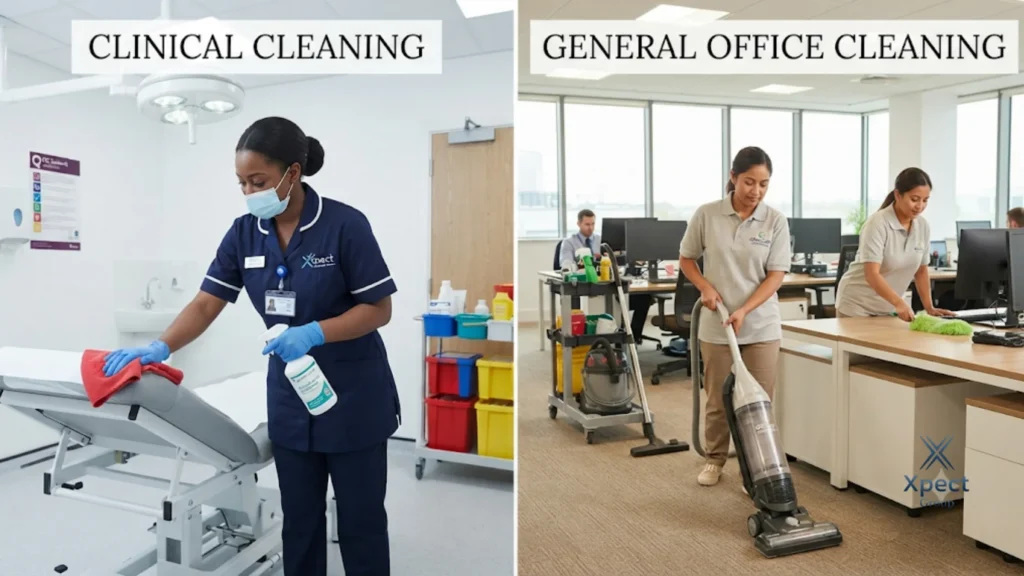
General cleaning removes visible dirt and keeps a space tidy and pleasant. Clinical cleaning goes further: it is planned around the risk of infection, uses set methods and colour coded equipment, follows cleaning with disinfection where needed, and records what was done. Offices, shops and most commercial buildings need general cleaning done well. Surgeries, clinics, care settings, laboratories and treatment rooms need clinical cleaning.
Many buildings sit somewhere in between. A physiotherapy clinic inside an office block, or a gym with a treatment room, may need both. Knowing the difference helps you buy the right service and avoid paying for the wrong one.
What general cleaning covers
General commercial cleaning is about appearance, comfort and basic hygiene. It includes emptying bins, vacuuming and mopping, dusting, cleaning kitchens and toilets, and wiping down desks and touch points. Done properly, it keeps a workplace healthy and makes a good impression on visitors.
In an office, for example, good office cleaning focuses on high use areas such as kitchens, washrooms and meeting rooms, with periodic tasks such as carpet cleaning and high dusting. The aim is a clean, safe working environment that meets the duty in the Workplace (Health, Safety and Welfare) Regulations 1992 to keep workplaces sufficiently clean.
What clinical cleaning adds
Clinical cleaning starts from a different question: where could infection spread, and how do we stop it? That changes almost every part of the job.
The difference is not only about stronger chemicals. In fact, using disinfectant everywhere is not good practice. Clinical cleaning uses the right product in the right place, and relies on method as much as chemistry. Our guide to cleaning and disinfecting explains why removing soil first is essential for disinfectant to work.
| Element | General cleaning | Clinical cleaning |
|---|---|---|
| Planning | Room by room tasks | Risk zoning by area and use |
| Method | Clean until visibly clean | Set sequence, clean to dirty, high to low |
| Products | Multi surface cleaners | Detergent followed by disinfectant, or combined products, at set dilutions |
| Equipment | Shared kit across areas | Colour coded and kept separate by zone |
| Records | Optional logs | Cleaning records and regular audits |
| Training | Basic task training | Infection prevention, PPE and spill handling |
Method matters more than product
A cleaner who wipes a treatment couch with a strong disinfectant but uses the same cloth on the door handle afterwards has undone the work. Clinical cleaning follows a sequence. Work moves from clean areas to dirty areas and from high surfaces to low ones. Cloths are changed between zones, and single use cloths are often used in high risk rooms.
Contact time is another detail that separates the two. Most disinfectants need to stay wet on a surface for a set time to work. In general cleaning, a quick wipe is fine. In clinical cleaning, the cleaner needs to know the contact time for the product and follow it.
Where each type is needed
Pharmaceutical cleaning is a step beyond clinical cleaning again. It often involves Good Manufacturing Practice requirements, documented procedures and cleanroom protocols, so it should be scoped separately.
- General cleaning: offices, retail units, showrooms, warehouses, communal areas and most hospitality front of house
- Clinical cleaning: GP surgeries, dental practices, clinics, care homes, treatment rooms and patient facing areas
- Controlled or specialist cleaning: laboratories, pharmaceutical facilities and cleanrooms, where validated procedures and strict documentation apply
- Mixed approach: gyms with physio rooms, schools with medical rooms, hotels with spas, offices with first aid rooms
Signs you may be buying the wrong service
If your premises see patients or clients for treatment and your cleaning contract does not mention colour coding, disinfection, spills or audits, you are likely receiving general cleaning. That may be fine for your reception and offices, but not for the clinical rooms.
The reverse also happens. Some businesses pay for a clinical specification across an entire building when only a few rooms need it. A sensible provider will zone the site so that clinical methods are used where they add value, and general cleaning covers the rest.
How to specify a mixed site
Mixed sites work best with one specification that sets out clearly which areas get which approach. Start by listing every room and how it is used. Mark the rooms where people receive treatment, where bodily fluids could be present, or where vulnerable people spend time. Those become clinical areas.
This avoids two common problems: clinical rooms cleaned like offices, and the whole building charged at clinical rates.
- Agree separate equipment for clinical rooms, stored apart from general kit
- Set the order of cleaning so clinical rooms are cleaned with fresh equipment
- Record clinical area cleans separately from general cleaning
- Review the zoning when room use changes
Training and supervision
The cleaners on a clinical site need more than a task list. They need to understand infection prevention basics, hand hygiene, when to wear gloves and aprons, how to deal with a spill, and how to dilute chemicals safely under COSHH. Supervisors should check work against the specification, not simply sign a log.
When comparing providers, ask how cleaners are trained for clinical areas, how that training is recorded and refreshed, and who checks the work on site.
Cost of clinical cleaning vs general cleaning
Clinical cleaning usually costs more per hour than general cleaning because it takes longer to do properly and requires more training, equipment and record keeping. The total cost depends on how much of your site truly needs it. Zoning carefully is the simplest way to control cost without lowering standards where they count.
A worked example: one building, two approaches
Picture a three storey building with a private medical clinic on the ground floor and offices above. The clinic has a reception, four consulting rooms, a minor procedures room and patient toilets. Upstairs there are open plan desks, a kitchen, meeting rooms and staff toilets.
Under a sensible plan, the procedure room is cleaned after every session and fully each evening using single use cloths, detergent followed by disinfectant and a set sequence. Consulting rooms are cleaned daily with colour coded equipment, with couches and touch points disinfected. Patient toilets are cleaned and checked through the day. The offices upstairs receive good general cleaning: desks, kitchen, toilets, floors and bins, with periodic carpet cleaning.
The clinic’s equipment is stored separately and never taken upstairs. Records for the clinical areas are kept and audited monthly, while the offices are reviewed on a lighter cycle. The building owner pays clinical rates only for the ground floor, and the clinic has the evidence it needs for inspection.
Products: what to look for
In general cleaning, a neutral detergent handles most surfaces, with specialist products for washrooms, glass and floors. In clinical areas, the choice is wider. Some sites use a detergent clean followed by a chlorine based disinfectant, while others use combined detergent and disinfectant products, or products based on hydrogen peroxide. The right choice depends on the risks in the area, the surfaces and the advice of whoever leads infection prevention for the site.
Whatever is used, the cleaner should know the dilution, the contact time and the safety precautions. Safety data sheets and COSHH assessments must be available, and products should be stored securely. Ready to use products and dosing systems help reduce mistakes with dilution.
Hand hygiene and personal protection
Clinical cleaning depends on good hand hygiene. Cleaners should wash or sanitise their hands before and after each room, change gloves between zones and never carry contamination from one area to another. Aprons, gloves and, where needed, eye protection should be provided and worn correctly. These habits are simple, but they are what turns a clean room into a safe one.
Reviewing your current arrangement
If you are unsure which approach you are receiving, ask for your cleaning specification and look for four things: risk zoning, colour coding, a disinfection method for clinical areas and an audit process. If any of these are missing for rooms where patients are treated, it is worth reviewing the contract. A short walkthrough with your provider is often enough to agree changes.
Clinical cleaning vs general cleaning: a side by side view
The easiest way to see the difference is to follow one task through both approaches. Take a toilet in a busy building. Under general cleaning, a cleaner wipes the seat, cleans the bowl, mops the floor and refills paper. The room looks clean, and for an office that is usually enough.
Under clinical cleaning, the same cleaner works in a set order, from clean areas to dirty ones and from high to low. They use a colour coded cloth that never leaves that room. They change gloves between tasks, use a product with a stated contact time and record the clean on a sheet at the door.
Both cleaners spend time in the same room. The difference is that the clinical method is designed so that germs are not moved from one surface to the next. It can also be checked afterwards, which matters when patients are at risk.
Which approach does your building need?
Most buildings do not need clinical cleaning everywhere. A dental practice needs it in surgeries and decontamination rooms, while its staff kitchen can follow a general routine. A care home needs it in residents rooms and bathrooms, while offices upstairs may not.
Start by listing every room and asking two questions. First, who uses it and how vulnerable are they? Second, what happens there, and does it involve body fluids, open wounds or medical equipment? Rooms that score high on either question should move to a clinical schedule.
Once that list exists, your cleaning provider can price each zone fairly. You avoid paying clinical rates for corridors, and you avoid the bigger risk of cleaning treatment rooms like a reception area.
Common myths about clinical cleaning
A few ideas come up again and again when practices compare quotes. It is worth clearing them up before you sign anything.
- Stronger chemicals mean a cleaner room. In fact, the right product used correctly matters far more than strength.
- Clinical cleaning is only for hospitals. GP surgeries, dental practices, care homes and beauty clinics all have clinical areas.
- More frequent cleaning always helps. Extra visits without a proper method simply repeat the same mistakes.
- Any cleaner can do it with a quick briefing. Clinical work needs training, supervision and regular checks to stay consistent.
How Xpect Group can help
We provide clinical cleaning services for surgeries, clinics and treatment rooms, alongside general commercial and office cleaning for the rest of a building. If you are not sure which approach your premises need, talk to our team and we will walk the site with you and suggest a sensible split.
Frequently asked questions
Is clinical cleaning the same as deep cleaning?
No. Deep cleaning is a more thorough clean done periodically. Clinical cleaning is a way of cleaning based on infection risk, and it is carried out routinely in clinical areas.
Do offices ever need clinical cleaning?
Usually not, although first aid rooms, medical rooms and on site clinics within an office may benefit from a clinical approach in those specific rooms.
Should disinfectant be used on every surface?
No. Disinfectant should be used where there is a risk of infection, after surfaces have been cleaned. Using it everywhere adds cost and exposure to chemicals without improving hygiene.
Is clinical cleaning more expensive?
It usually costs more per hour because it takes longer and requires extra training and equipment. Zoning the building so clinical methods are used only where needed keeps overall cost reasonable.