

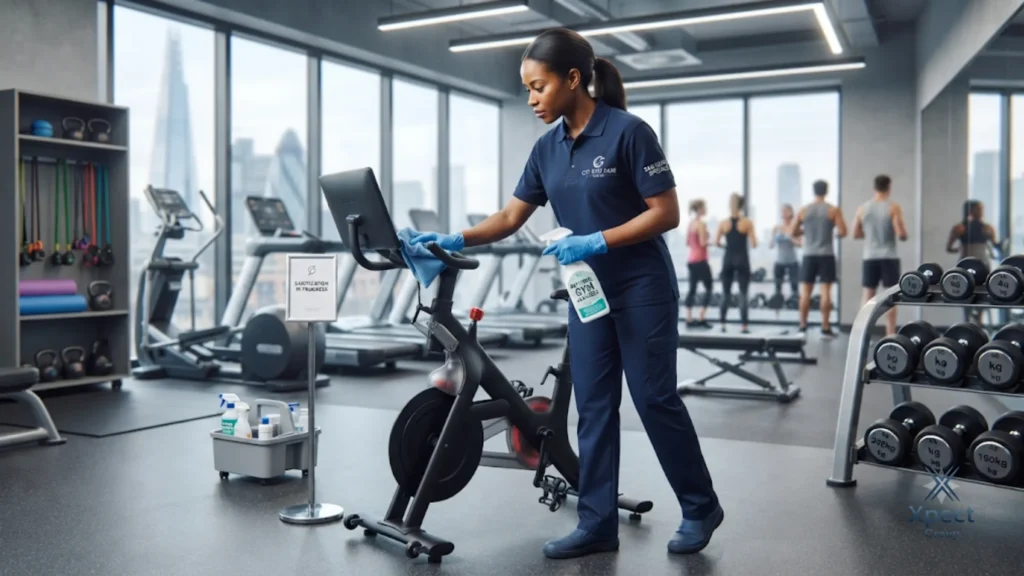
What a gym cleaning checklist should cover
A good gym cleaning checklist splits the building into zones and sets daily, weekly and periodic tasks for each. The gym floor needs equipment touch points and mats cleaned daily, changing rooms and showers need the most frequent attention, studios need floors and props cleaned between busy sessions, and reception needs to look right from opening until close. Members notice cleanliness quickly, and it affects whether they stay.
Why gyms need their own checklist
Gyms combine sweat, skin contact, warm damp areas and high footfall. Equipment is shared constantly, and changing rooms stay humid for most of the day. A general office cleaning routine does not cover these conditions, and it rarely fits around early morning and late evening opening hours.
Cleanliness is also one of the first things members judge. Our article on member retention looks at this in more depth, but the short version is that a dirty changing room or a sticky bench is often mentioned in reviews and cancellation feedback.
Zone one: the gym floor
The gym floor is where shared contact is highest. Members should wipe equipment after use, but a cleaning team should still clean every touch point properly each day.
Weekly, add a deeper clean of machine frames, mirror cleaning, and moving lighter equipment to clean underneath. Rubber flooring benefits from a periodic machine scrub, using products recommended by the floor manufacturer so the surface is not damaged.
- Handles, grips, seats and pads on resistance machines
- Cardio machine consoles, handrails and screens
- Free weights, dumbbell racks, kettlebells and barbells
- Benches, including the underside edges people grip
- Rubber flooring and mats, vacuumed then mopped with a suitable product
- Wipe stations refilled and bins emptied
Zone two: changing rooms, showers and toilets
Changing rooms need the most attention in any gym. Warmth and moisture create the conditions for mould, odours and fungal infections. They should be cleaned thoroughly every day and checked at intervals during peak hours.
A mid morning and early evening check, even for fifteen minutes, keeps these areas presentable when they are busiest. Record each check on a sheet members can see.
| Task | Frequency |
|---|---|
| Toilets, urinals, sinks and taps cleaned and disinfected | Daily, with checks at peaks |
| Shower floors, walls and drains cleaned | Daily |
| Benches, lockers and hand dryers wiped | Daily |
| Floors mopped and dried to reduce slips | Several times daily |
| Grout and silicone checked for mould | Weekly |
| Descaling of shower heads and screens | Monthly |
| Extraction vents dusted | Monthly |
Zone three: studios and functional areas
Studios see bursts of heavy use. Floors take sweat and chalk, and props such as mats, blocks, steps and bikes are handled by many people in a single session.
Functional training areas with turf, sleds and ropes need regular vacuuming and wipe downs. Chalk residue should be cleared before it spreads to other zones.
- Spin bikes wiped down, including handlebars and seat posts
- Mats and props cleaned or rotated through a cleaning cycle
- Floors cleaned with a method suited to sprung or wooden surfaces
- Mirrors and ballet bars cleaned
- Sound equipment and microphones wiped where shared
Zone four: reception, cafe and offices
Reception is the first and last impression. Glass doors, the front desk, card readers, turnstiles and seating should be cleaned before opening and kept tidy through the day. If your gym has a cafe or vending area, follow food hygiene practice for surfaces where drinks and snacks are prepared.
Staff offices and break rooms are easy to overlook. Keep them on the checklist so the team works in a clean space too.
Pools, saunas and steam rooms
Leisure centres and larger clubs with wet areas need specialist attention. Poolside surfaces, sauna benches and steam rooms require products that suit high temperatures and humidity. Water treatment is a separate specialist task, but poolside cleaning and changing village hygiene sit well within a cleaning contract. Our guide to hygiene standards for leisure centres covers these areas.
Scheduling around opening hours
Many London gyms open from early morning until late, and some run around the clock. The main clean usually happens overnight or in the quietest hours, with day porter cover at peak times.
For round the clock gyms, cleaning can be zoned so part of the floor is closed briefly while it is cleaned.
- Main clean in the quietest window, such as late evening or very early morning
- Short checks of changing rooms and toilets at peak times
- Weekly and monthly tasks planned for the quietest day
- Periodic deep cleans scheduled around class timetables and bank holidays
Products and equipment
Use products that are effective on skin oils and sweat but safe for the surfaces in your gym. Some disinfectants damage upholstery or rubber over time, so check the manufacturer’s guidance. Microfibre cloths, colour coded by zone, help stop cross contamination between toilets and equipment. Keep safety data sheets and COSHH assessments on site.
Member involvement
Cleaning teams work best when members play their part. Clear signage, well stocked wipe stations and staff modelling good habits all help. A visible cleaning schedule tells members that hygiene is taken seriously and gives them confidence when they arrive.
Common hygiene risks in gyms
Shared equipment, damp floors and skin contact create a specific set of risks. Fungal infections such as athlete’s foot spread easily on wet changing room floors and shower trays. Skin infections can pass through shared mats and benches, which is why regular cleaning of these surfaces matters. Respiratory viruses spread through shared air and touch points, particularly in busy studios during winter.
None of this means gyms are unsafe. It means cleaning should target the places where these risks are highest: changing rooms, mats, benches, grips and handles, and studios after busy classes. A checklist that focuses effort here protects members far more than one that spreads time evenly across the building.
Ventilation and odour
Odour is one of the first things members notice. It usually comes from changing rooms, drains, damp towels and rubber flooring. Good cleaning helps, but ventilation is just as important. Make sure extraction fans work, vents are dusted and drains are cleaned and treated regularly. Avoid masking odours with heavy fragrances, as they often make the problem more noticeable.
Rubber flooring can hold odour if it is cleaned with the wrong product or left wet. Follow the manufacturer’s guidance and allow floors to dry fully, especially overnight.
Boutique studios and small gyms
Boutique studios often have a single studio, a small changing area and a reception. Their peaks are sharp: several classes back to back, then quiet periods. Cleaning should be built around the timetable, with mats, bikes and props cleaned between sessions by staff or a cleaner, and a full clean at the end of the day.
Small independent gyms often rely on staff to clean during the day. A professional team can take on the overnight clean and weekly deep tasks, so staff can focus on members.
Measuring standards against your gym cleaning checklist
Simple checks keep standards visible. A weekly walk round using the zone checklist, scored for each area, shows where attention is needed. Member feedback is valuable too, so make it easy to report issues through the app, a QR code or reception. Respond quickly and visibly, and members will trust that cleanliness is taken seriously.
Planning periodic deep cleans
Deep cleans are best scheduled during quiet times, such as bank holiday weekends or late summer when attendance is lower. A typical deep clean includes machine scrubbing of floors, full descaling of showers, cleaning behind and under equipment, upholstery cleaning, high level dusting and vent cleaning. Book these in advance so they do not clash with peak January demand.
Trends in gym cleaning for 2026
Members expect visible hygiene. Many gyms now display cleaning schedules on screens or in their apps, and some let members report a dirty area by scanning a QR code. Daytime cleaners on the gym floor are becoming more common than relying on an overnight clean alone. Low odour and fragrance free products are popular, especially in studios where members breathe hard during classes. Recovery zones with saunas, cold plunges and massage equipment are also spreading, and they need their own place on the checklist.
Gym cleaning checklist: daily, weekly and monthly tasks
A checklist works best when every task has a clear frequency. The table of zones above tells your team where to clean. This section tells them how often.
Daily tasks keep the gym safe and pleasant for members. Weekly tasks stop dirt building up in places people do not look. Monthly tasks protect equipment and finishes so they last longer.
- Daily: wipe all equipment touch points, clean mirrors, mop changing room floors, clean toilets and showers, empty bins and refill soap and paper.
- Weekly: clean under machines, wipe skirting boards and vents, descale showers, wash rubber mats and clean water fountains.
- Monthly: deep clean upholstery on benches, scrub grout in wet areas, clean high level fittings and check sealants for mould.
Making your gym cleaning checklist easy to follow
The best checklist is short enough to use on a busy shift. Put it on a single page for each zone and fix it near that zone. Use plain words and tick boxes rather than long notes.
It also helps to add a time next to each task. For example, wiping the free weights area might take ten minutes while a full changing room clean takes forty. When managers can see the time each task needs, they can staff each shift properly.
Finally, ask cleaners for feedback after the first month. They will spot tasks that are missing, products that do not work and areas that take longer than planned. Small changes at this stage make the checklist much more useful.
Gym cleaning checklist for 24 hour and late night sites
Many London gyms now open around the clock, which removes the quiet overnight window cleaning teams once relied on. Instead, cleaning has to happen while members train.
The answer is to split the building into small sections and close each one briefly in turn. A cleaner can tackle one row of machines, then move on, leaving the rest open. Changing rooms can be cleaned in halves, with clear signs showing which side is in use.
Quieter periods still exist, usually between midnight and five in the morning. Use them for floor scrubbing and any task that needs an area fully closed.
How Xpect Group can help
We provide gym cleaning in London and the surrounding counties for independent gyms, boutique studios and leisure centres. We build a zone based plan around your opening hours, with checks at peak times and periodic deep cleans when they cause least disruption. If you want us to look at your current routine, book a walkthrough.
Frequently asked questions
How often should gym equipment be cleaned?
Members should wipe equipment after each use, and a cleaning team should clean all touch points at least once a day, with deeper cleans weekly.
What is the hardest area of a gym to keep clean?
Changing rooms and showers, because warmth and moisture encourage mould and odours. They need daily cleaning and checks at peak times.
Can a gym be cleaned while it is open?
Yes. Most gyms combine a main clean in the quietest hours with short checks during the day, and zone the floor so members can keep training.
What should a gym deep clean include?
Machine scrubbing of floors, full descaling of showers, cleaning behind and under equipment, upholstery cleaning, high dusting and vent cleaning, usually planned for quieter periods.
Do gym members expect to see cleaning taking place?
Increasingly, yes. Visible daytime cleaning and published schedules reassure members that hygiene is taken seriously.