

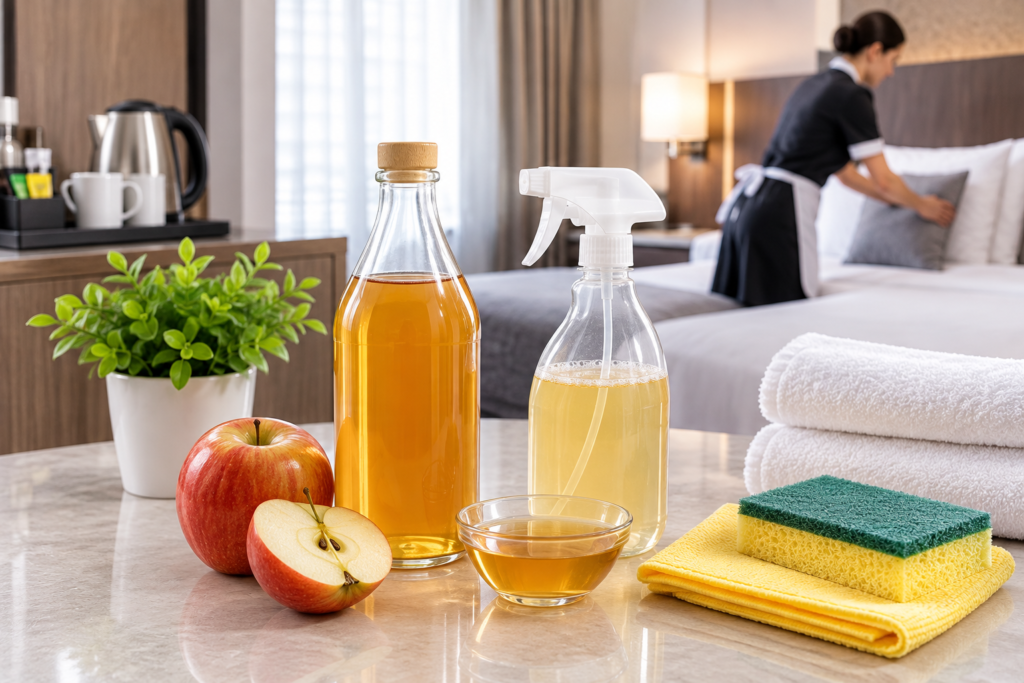
You’ve probably got apple cider vinegar in your kitchen cupboard. But can it clean your hotel too? The short answer is yes, in many cases. But it’s not perfect for everything.
In this guide, we’ll look at the real pros and cons of using apple cider vinegar for cleaning, where it works best, and where it’s better to leave it in the cupboard.
Can You Use Apple Cider Vinegar to Clean?
Yes, you can. Apple cider vinegar (ACV) is mildly acidic. This makes it good at breaking down grease, dirt, and limescale. It also has a natural smell that fades quickly once it dries.
Many hotels and hospitality venues use ACV for cleaning as a low-cost, low-chemical option for everyday tasks. But like any cleaning product, it has strengths and limits.
The Pros of Using Apple Cider Vinegar for Cleaning
1. It Cuts Through Grease
ACV is great for wiping down kitchen surfaces, microwaves, and worktops where grease builds up — useful in staff kitchens and small guest kitchenettes alike.
- Mix equal parts ACV and water in a spray bottle
- Spray onto the surface
- Wipe clean with a soft cloth
2. It Removes Limescale
Cider vinegar for cleaning works well on taps, kettles, and sinks with limescale build-up, including in-room kettles and bathroom fittings.
- Soak a cloth in undiluted ACV
- Wrap it around the tap or affected area
- Leave for 15–20 minutes, then wipe and rinse
3. It’s Low-Cost and Widely Available
Apple cider vinegar is cheap and easy to buy. This makes it a handy backup for small, everyday cleaning tasks.
4. It Has a Mild, Natural Scent
Unlike some cleaning chemicals, ACV doesn’t leave a strong artificial smell. The vinegar scent fades once it dries — helpful for guest-facing areas where first impressions matter.
5. It’s Gentle on Many Surfaces
Used correctly and diluted, ACV works safely on glass, most plastics, and sealed worktops.
The Cons of Using Apple Cider Vinegar for Cleaning
1. It Can Damage Natural Stone
Never use ACV on marble, granite, or limestone. The acid can etch and dull the surface permanently — a real risk in hotel lobbies, reception desks, and bathrooms that often feature stone finishes.
2. It’s Not a Full Disinfectant
ACV can help clean surfaces, but it doesn’t kill all germs and bacteria the way a proper disinfectant does. This matters enormously in guest rooms, shared hotel kitchens, and washrooms, where hygiene standards need to be consistently high for every new guest.
3. It Can Strip Wax or Polish
If your reception desks or floors have a waxed or polished finish, ACV can strip this away over time.
4. Strong Smell While Wet
Some people don’t like the vinegar smell, especially in enclosed spaces like guest rooms or meeting rooms. It fades once dry, but it can be strong at first.
5. Not Suitable for All Fabrics
Test on a small, hidden area first. ACV can affect the colour of some fabrics, carpets, and soft furnishings common throughout hotels.
Apple Cider Vinegar Dilution Guide
| Task | Dilution | Notes |
| Worktop and reception desk cleaning | 1:1 with water | Safe for most sealed surfaces |
| Glass and windows | 1:1 with water | Wipe with a lint-free cloth |
| Limescale removal | Undiluted | Leave to soak for best results |
| Light stain lifting | 1:1 with water | Test on a hidden area first |
| Floors (sealed, non-stone) | 1 cup ACV to 4 litres water | Avoid on natural stone floors |
Safety Tips Before You Start
- Never use on marble, granite, or limestone surfaces
- Don’t mix with bleach — this creates harmful fumes
- Always test on a small area first
- Use a well-ventilated room, especially with undiluted ACV
- Store away from children and pets
When Your Hotel Needs More Than Vinegar
Apple cider vinegar is a handy tool for small, everyday jobs. But hotels and hospitality venues need more than surface wiping. Guest rooms, shared kitchens, washrooms, and high-touch areas need proper disinfecting, not just a natural clean. This matters even more in spaces with constant guest turnover and high daily foot traffic.
This is where a professional team makes the difference. Our hotel and hospitality cleaning services go beyond DIY methods, using proper products and training to keep guest-facing and back-of-house spaces genuinely hygienic, not just fresh-smelling.
Frequently Asked Questions
Is apple cider vinegar as good as white vinegar for cleaning?
They work in a similar way, but apple cider vinegar can leave a slight colour or smell behind on light surfaces. White vinegar is usually the safer choice for cleaning, while ACV is fine for small, everyday jobs.
Does apple cider vinegar disinfect surfaces?
Not fully. It can help remove dirt and some bacteria, but it isn’t a substitute for a proper disinfectant, especially in guest rooms, shared hotel kitchens, and washrooms.
Can I mix apple cider vinegar with baking soda?
You can, but they cancel each other out chemically once mixed, which reduces their cleaning power. It’s better to use them separately, for different tasks.
Is apple cider vinegar safe for hotel electronics?
No. Avoid using it near keyboards, screens, TVs, or other electronics in guest rooms and offices. Stick to proper electronic-safe cleaning products for these areas.
Clean Enough for Every Guest?
Apple cider vinegar for cleaning is a handy, low-cost option for everyday jobs like grease and limescale. But it has real limits, especially on stone surfaces and for full disinfection. Knowing when to use it, and when to call in the professionals, keeps your hotel both fresh and genuinely clean for every guest.
Want a hotel that’s properly clean, every day? Get in touch with Xpect Group and let our team, backed by clinical-level hygiene standards, handle it for you.