
What hospitality cleaning services cover
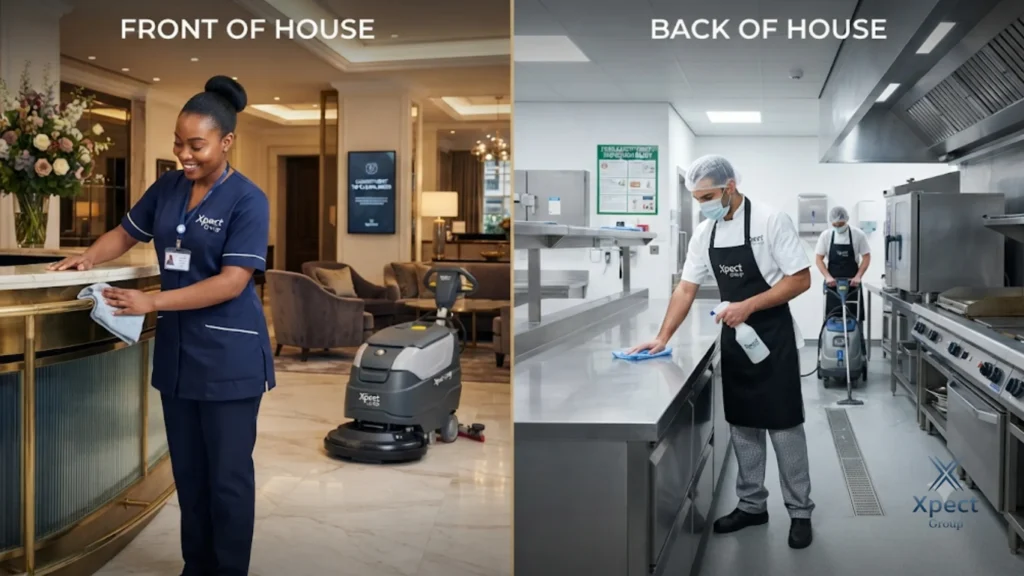
Hospitality cleaning services cover two worlds. Front of house is everything guests see, such as lobbies, lounges, restaurants, bars, corridors and public toilets. Back of house is everything that keeps the operation running, including kitchens, staff areas, laundries and service corridors. A good plan treats both with equal care, schedules work around guests and service times, and checks results consistently.
Why hospitality cleaning is different
In hospitality, cleanliness is part of the product. Guests judge a hotel or restaurant within seconds, and they share what they see in online reviews. A stained carpet in a corridor or a dusty lounge table can undo the work of an excellent team.
Timing is also unusual. Lobbies and bars are busy late into the night, breakfast service starts early, and guest rooms turn over during the day. Cleaning has to fit between these moments without getting in the way.
Front of house priorities
Front of house cleaning is about presentation and comfort. Guests should never feel they are in the way of cleaning, so much of this work happens early in the morning or during quieter periods.
Periodic work such as carpet shampooing, upholstery cleaning and high level dusting of chandeliers and light fittings is best planned for the quietest weeks of the year.
- Entrance doors, glass and canopy areas cleaned and checked through the day
- Lobby floors vacuumed or polished, with entrance mats cleaned
- Reception desk, lift buttons and handrails wiped regularly
- Lounge and bar furniture, tables and soft furnishings cleaned
- Public toilets checked and restocked at set intervals
- Restaurant floors and furniture cleaned after each service
Guest rooms and housekeeping support
Many hotels run their own housekeeping teams, while others bring in a cleaning partner for some or all of the rooms. Either way, room standards should be written down and checked. Our housekeeping checklist sets out daily, weekly and monthly tasks in detail.
Outsourced support is often most useful for deep cleans, peak season cover, public areas and night cleaning, so in house housekeepers can focus on rooms.
Back of house priorities
Back of house is where food safety and staff welfare live. Kitchens need daily cleaning of surfaces, floors and equipment, with deeper cleans of extraction canopies and filters on a set schedule. Food businesses are inspected by local authority officers under the Food Hygiene Rating Scheme, and the rating is displayed publicly, so cleanliness here has a visible impact.
Our restaurant cleaning checklist goes into kitchen tasks further, including how to keep records for inspections.
| Area | Key tasks | Frequency |
|---|---|---|
| Kitchen surfaces and equipment | Clean and sanitise | After each service |
| Kitchen floors and drains | Scrub and clear | Daily |
| Extraction and canopies | Degrease filters and surfaces | Weekly to monthly, with specialist duct cleaning as needed |
| Staff changing and rest areas | Full clean | Daily |
| Bin stores | Clear, wash and deodorise | Several times weekly |
| Laundry rooms | Lint removal and surfaces | Daily |
Night cleaning
Night cleaning is common in hotels and late opening venues. A small team can clean lobbies, restaurants, bars, gyms and meeting rooms after guests have gone to bed, so the building is ready for breakfast. This avoids disruption and means day staff start with a clean slate.
Events, conferences and functions
Function rooms need rapid turnarounds. A room used for a wedding on Saturday night may host a conference on Monday morning. Cleaning teams should be scheduled around the events calendar, with extra hands for setup and breakdown where needed.
Products, safety and sustainability
Hospitality cleaning involves a wide range of surfaces, from marble and wood to fabrics and stainless steel. Products should suit each surface and be used at the correct dilution. COSHH assessments and safety data sheets should be held on site.
Guests increasingly care about sustainability. Concentrated products, microfibre cloths and sensible linen policies all reduce environmental impact without lowering standards.
Checking standards
Consistent checks keep standards high. Duty managers can carry out quick walk rounds of public areas, while cleaning supervisors audit against the specification each week. Guest feedback and review comments are useful too: if guests mention cleanliness, positively or negatively, share it with the cleaning team.
Questions to ask about hospitality cleaning services
- Can you work around our service times and events calendar?
- Do you provide night cleaning and peak season cover?
- How do you train cleaners for different surfaces and food areas?
- How will standards be checked and reported to us?
- Who do we contact for urgent requests, such as a spill before an event?
Restaurants and bars
Restaurants and bars need cleaning that keeps pace with service. Between services, tables, chairs and floors are reset, and toilets are checked. After closing, a full clean of the dining room, bar counters, back bar and toilets prepares the venue for the next day. Glass washers, ice machines and beer lines are usually handled by bar staff or specialists, but the areas around them should be on the cleaning plan.
Late opening venues often benefit from early morning cleaning, when the venue is empty and the team can work without interruption. This also means any problems from the night before, such as spills or breakages, are dealt with before staff arrive.
Spas, pools and leisure areas
Hotels with spas, pools and gyms need cleaning that suits warm, wet conditions. Changing rooms, showers, saunas and treatment rooms all need daily attention, with products suited to high humidity and sensitive surfaces. Treatment rooms used for massages or beauty treatments should be cleaned between clients, with linen changed and surfaces disinfected.
Pool water treatment is specialist work, but poolside areas, loungers and changing villages sit well within a cleaning contract.
Peak season and staffing
Hospitality is seasonal. Summer, Christmas and major events in London bring higher occupancy and more covers. Cleaning plans should flex with demand, adding hours for peak weeks and planning deep cleans for quiet periods. A cleaning partner with access to trained cover staff can help hotels avoid gaps when demand jumps or in house staff are on leave.
Pest prevention
Good cleaning is one of the best defences against pests. Food debris in kitchens, bin stores and under furniture attracts mice and insects. Regular deep cleaning of these areas, combined with a pest control contract, keeps problems away. Cleaners should report any signs of pests straight away so they can be dealt with quickly.
Guest reviews and cleanliness
Cleanliness is one of the most mentioned topics in hotel and restaurant reviews. Reading reviews regularly helps identify patterns, such as dusty corridors or tired bathrooms. Share these insights with your cleaning team and adjust the plan. Responding publicly to cleanliness comments, and showing what has changed, builds trust with future guests.
Trends in hospitality cleaning for 2026
Guests are paying closer attention to how clean a venue looks and feels. Hotels are publishing their cleaning commitments on booking pages and in rooms. Many are moving towards eco friendly products, refillable amenities and linen reuse options, which change how housekeeping is planned. Digital checklists on phones allow supervisors to inspect rooms and public areas quickly and send photos of problems straight to the team. Venues are also opening for longer, with all day dining and coworking lounges, so public areas need cleaning across more hours of the day.
Building a cleaning plan that lasts
Start with a walk round of the venue with your cleaning partner, listing every area and how it is used. Agree tasks, frequencies and times for each, and set out who does what between in house staff and the contractor. Review the plan every quarter, using guest feedback, inspection results and audit scores. A plan that is reviewed regularly stays relevant as the business changes.
Hospitality cleaning services for small hotels and guest houses
Smaller properties face the same guest expectations as large hotels, but with fewer staff. The owner may also be the manager, the receptionist and the person who checks rooms. That makes a reliable cleaning routine even more important.
A practical approach is to split the work. In house staff look after guest rooms, while an outside team handles public areas, kitchens and periodic deep cleans. This keeps costs under control and gives the owner time to focus on guests.
Agree a short checklist for each area and a weekly walk round. Even fifteen minutes a week spent checking toilets, the breakfast room and stairs can stop small problems turning into poor reviews.
Kitchen hygiene and hospitality cleaning services
Commercial kitchens are inspected by the local authority under food hygiene rules, and the rating is often displayed at the door. Cleaning plays a large part in that score. Surfaces, floors, walls and equipment all need regular cleaning, and records help show that it happens.
Kitchen staff usually clean as they go during service. A specialist team can then deep clean at night or between services, reaching behind equipment, degreasing extraction canopies and cleaning floor drains. This split works well because each team focuses on what it does best.
Make sure your provider uses food safe products in kitchen areas and keeps their colour coding separate from washrooms.
Measuring the value of hospitality cleaning services
Cleaning is often treated as a cost, but in hospitality it directly shapes income. Guests mention cleanliness in reviews more than almost any other topic. A spotless lobby and fresh rooms support repeat bookings and better ratings on booking platforms.
Track a few simple indicators: cleanliness comments in reviews, room inspection scores and the number of complaints each month. Share these with your cleaning provider. When both sides can see the results, it is far easier to agree where effort should go.
Hospitality cleaning services and staff training
Even the best cleaning plan depends on the people carrying it out. Hospitality cleaners need to know how to work quietly around guests, how to greet people politely and when to step back from a busy area. They also need clear training on products, colour coding and safe handling of linen and waste.
Ask your provider how new cleaners are inducted at your property and how often refresher training takes place. A short induction covering your layout, your brand standards and your emergency procedures makes a noticeable difference in the first weeks.
How Xpect Group can help
We provide hospitality cleaning services for hotels, restaurants, bars and venues across London and the surrounding area. We cover front and back of house, night cleaning and periodic deep cleans, planned around your guests and service times. To discuss your venue, contact our team.
Frequently asked questions
What is included in hospitality cleaning?
It usually covers public areas, restaurants and bars, guest room support, kitchens, staff areas and periodic deep cleaning, depending on what your own team handles.
Can cleaning be done without disturbing guests?
Yes. Most public area cleaning is done at night or early in the morning, with discreet checks during the day.
How often should a hotel kitchen be deep cleaned?
Surfaces and equipment should be cleaned after each service, with deeper cleaning of extraction and hard to reach areas on a weekly to monthly cycle, and specialist duct cleaning as needed.
Do hotels outsource housekeeping?
Some do, fully or partly. Many keep room housekeeping in house and outsource public areas, night cleaning, deep cleans and peak season cover.
What cleaning trends are hotels following?
Many hotels are adopting eco friendly products, digital inspection checklists and published cleaning commitments, alongside longer cleaning hours for all day public areas.