

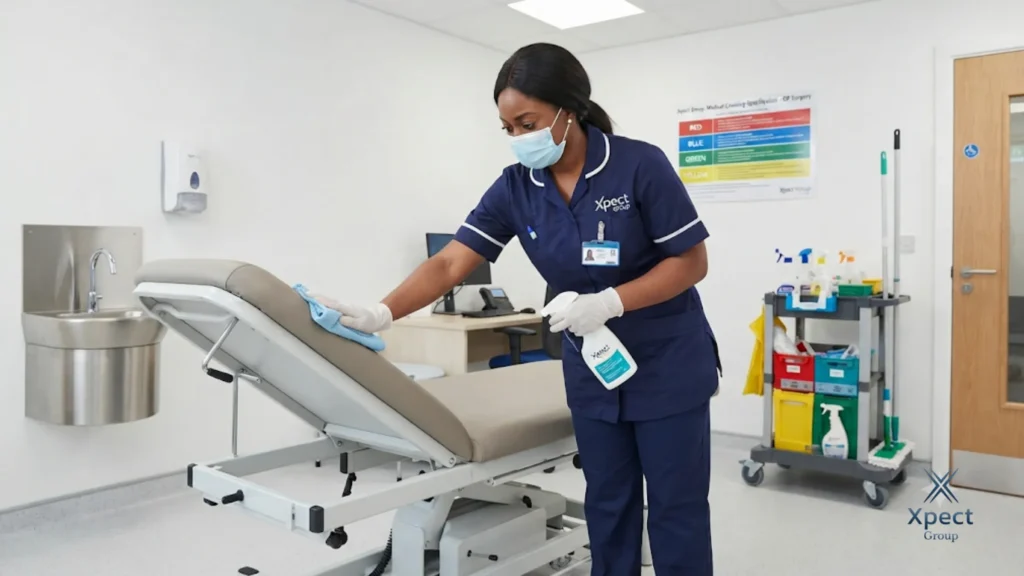
What a medical cleaning company in London should provide
A medical cleaning company in London should give a GP surgery or clinic a written cleaning specification based on risk, trained cleaners who follow colour coding and clinical waste rules, a schedule that works around appointments, and regular audits you can show an inspector. If a provider cannot explain how each room is cleaned, how often, and how the result is checked, it is offering general cleaning with a medical label.
This guide covers what that looks like in practice, the questions to ask, and how to compare quotes fairly. If you are reviewing your current arrangement, it may help to read it alongside our notes on choosing a medical cleaning service.
Why medical premises need a different approach
A GP surgery is not an office with a few extra sinks. Patients arrive unwell, staff move between consulting rooms all day, and surfaces such as couches, door handles and reception counters are touched by hundreds of people each week. Cleaning has to reduce the spread of infection, not simply make rooms look tidy.
Practices are also inspected. The Care Quality Commission looks at whether premises are clean and whether infection prevention and control is managed properly. Our article on CQC cleaning standards explains this in more detail, but the practical point is simple: you need evidence, not just a clean room on the day of a visit.
London adds its own pressures. Many surgeries operate from converted houses or shared health centres with narrow corridors, limited storage and short windows between the last appointment and the building being locked. A good provider plans around these limits rather than ignoring them.
How rooms should be zoned by risk
The most useful thing a medical cleaning company can do is divide your premises by risk. The NHS National Standards of Healthcare Cleanliness 2021 use functional risk categories, from FR1 for the highest risk areas down to FR6 for the lowest. Primary care sites are not always required to follow every part of that framework, but the thinking behind it is sound and many practices adopt it.
Zoning means effort goes where it matters. A treatment room couch and the patient toilet get more attention than a manager’s office, and the specification says so in writing.
| Area | Typical risk | Usual frequency |
|---|---|---|
| Treatment and minor procedure rooms | High | After sessions and daily |
| Consulting rooms | Medium to high | Daily, with touch points between sessions where agreed |
| Patient toilets | High | Daily, with checks during opening hours |
| Waiting room and reception | Medium | Daily |
| Staff kitchen and offices | Lower | Daily or several times a week |
What a good cleaning specification includes
Ask to see the specification before you sign anything. It should list each room or area, the tasks within it and how often each task is done. Vague phrases such as “general clean” or “as required” leave too much open to interpretation.
Disposable privacy curtains are common in surgeries now. Agree who records the date they were changed and who orders replacements, because that small detail is often missed.
- Touch points named individually, such as door handles, light switches, chair arms, card machines and couch frames
- Floor method for each surface, with separate equipment for clinical and non-clinical areas
- Colour coded cloths and mops, with red for toilets and washrooms, blue for general areas, green for kitchens and yellow for isolation or clinical areas
- Products named, with safety data sheets and COSHH assessments kept on site
- How spills of blood or bodily fluids are handled and who is allowed to deal with them
- Clinical and sharps waste responsibilities agreed clearly, as cleaners should not handle sharps bins
- Periodic tasks such as high dusting, curtain changes and deep cleaning of floors
Training your cleaners should have
Medical premises need cleaners who understand why each step matters. When you speak to a provider, ask what training their staff receive and how it is recorded. Useful topics include infection prevention basics, hand hygiene, the correct use of personal protective equipment, colour coding, dilution of chemicals and what to do when a room has been used by a patient with a known infection.
Consistency matters as much as training. A cleaner who works your site every evening learns the layout, knows which rooms are used for procedures and notices when something is out of place. Ask how the provider covers holidays and sickness, and whether a cover cleaner will be briefed on your specification before they arrive.
Scheduling around patients and staff
Most surgeries are cleaned in the evening after the last appointment, but that is not always the best answer. Some practices benefit from a short daytime visit to check toilets and the waiting room, particularly during winter when respiratory illness rises and footfall increases.
Extended access appointments, weekend clinics and shared buildings all affect timing. Give your provider an accurate picture of opening hours and any rooms used out of hours. A schedule built on real use is far more effective than one copied from another site.
Audits and records you should receive
An inspector will ask how you know the premises are clean. The answer should be a record of regular audits, scored against your specification, with actions noted where something fell short. The NHS standards use star ratings and a cleanliness charter displayed for patients, and some primary care sites now follow a similar approach.
Ask whether the cleaning provider will carry out audits jointly with your practice manager. Joint audits are quick, they build trust and they spot problems early.
- Cleaning logs for each area, signed and dated
- Monthly or quarterly audit scores, with photos where useful
- A clear process for reporting faults such as damaged flooring or broken dispensers
- Records of periodic and deep cleans
How pricing usually works
Medical cleaning is normally priced on the hours needed to complete the specification, plus consumables if you want them included. The number of rooms, the type of flooring, the number of toilets and the level of risk all affect the hours. Two quotes with the same weekly price can deliver very different results if one allows five hours and the other allows three.
When you compare quotes, compare the hours, the tasks and the audit arrangements rather than the headline figure. A low price with no specification often ends with staff doing extra cleaning themselves, which costs more in the long run.
Questions to ask a medical cleaning company in London
The answers will tell you far more than a brochure. A provider who welcomes these questions is usually the one who can answer them well.
- Can you show me a sample specification for a surgery or clinic of our size?
- How do you zone rooms by risk, and how is that reflected in the hours quoted?
- What training do your cleaners receive, and how is it recorded?
- Who supervises the site, and how often do they visit?
- How do you handle cover for holidays and sickness?
- What records will we receive, and how quickly are complaints resolved?
Dental practices, physiotherapy and specialist clinics
The same principles apply beyond general practice, but each type of clinic has its own pressure points. Dental surgeries produce aerosols during treatment, so surfaces around the chair, spittoon area and overhead lights need careful attention, while instrument decontamination stays with the dental team. Physiotherapy and osteopathy clinics see heavy use of treatment couches, pillows and exercise equipment, so couch frames and shared props deserve a named place on the specification.
Aesthetic and cosmetic clinics often look more like hotels than surgeries, with soft furnishings, polished floors and glass. They still carry out procedures, so the treatment rooms need a clinical approach even if reception feels like a lounge. A good provider will recognise these differences on the first walkthrough and build them into the plan rather than offering one standard package.
Seasonal pressures in London practices
Winter is the hardest season for most surgeries. Respiratory illnesses rise, waiting rooms fill and patients bring in rain, mud and grit on their shoes. It is worth agreeing a winter plan in advance: extra checks of toilets and the waiting room, more frequent touch point cleaning, better entrance matting and spare stock of consumables.
Flu and vaccination clinics can bring hundreds of extra patients through the doors over a few weekends. If your practice runs these, tell your cleaning provider early so they can add hours on the right days. Summer brings its own issues, including dust from open windows and heat in rooms without air conditioning, which makes odour control in toilets more important.
Making the handover work
The first month of a new cleaning contract sets the tone. Ask for a start up meeting with the supervisor, a walk round with your practice manager and a short list of priorities for week one. Agree a simple way for staff to report issues, such as a log at reception or a shared email address. After four weeks, review the specification together and adjust anything that is not working. Small changes made early prevent bigger problems later.
Medical cleaning for GP surgeries: a typical day
A GP surgery has a clear rhythm, and a good cleaning plan follows it. Before the doors open, cleaners should finish toilets, waiting areas and reception so the first patients arrive to a fresh building. Consulting rooms are usually cleaned the evening before, once the last appointment ends.
During the day, the practice team normally handles spot cleaning between patients. That includes wiping couches and equipment touched during an examination. Your cleaning provider should support this with clear product labels, a spill kit and enough stock so staff never run short.
In the evening, the full clean takes place. Floors are mopped room by room, bins are emptied, clinical waste is left ready for collection and every touch point is wiped. A short written note should then flag anything the practice manager needs to know, such as a damaged chair or a blocked sink.
Signs your current medical cleaning is falling short
Practices often notice problems before they can name them. If any of the points below sound familiar, it is worth reviewing your specification with your provider.
None of these issues needs a full change of contractor straight away. However, they do need a written plan to fix them, with dates and a named person responsible.
- Patients or staff comment on dusty high ledges or stained floors.
- Cleaning records are blank, late or signed off without detail.
- Different cleaners turn up each week and do not know the colour coding.
- Clinical rooms smell of strong products rather than smelling neutral.
- Audit scores are not shared with you, or no audits take place at all.
Preparing for inspection with your cleaning provider
The Care Quality Commission looks at whether premises are clean and whether infection risks are managed. Inspectors may ask to see your cleaning schedule, your audit results and how you act on them. A capable medical cleaning company will help you keep this evidence in one place.
Ask for a simple folder, paper or digital, that holds the specification, signed schedules, audit scores and any corrective actions. Review it with your provider every quarter. This way, you are ready for a visit at any time rather than rushing in the week before.
It also helps to walk the building together twice a year. Look at the areas inspectors notice first: waiting room chairs, toilets, treatment couches and sluice rooms. Agree any changes in writing so both sides know what has been promised.
How Xpect Group can help
We provide a medical cleaning service in London and the surrounding counties for GP surgeries, dental practices, clinics and treatment centres. We start with a walkthrough of your premises, agree a written specification with you and set a schedule that fits around your appointments. If you would like us to look at your current arrangements, you can request a site visit and we will talk through what your practice needs.
Frequently asked questions
How often should a GP surgery be cleaned?
Most surgeries need a full clean every day the practice is open, with higher risk areas such as treatment rooms and patient toilets given extra attention. Some practices add a short daytime check during busy periods.
Do cleaners deal with clinical waste?
Cleaners can remove bagged clinical waste to the agreed collection point if this is in the contract, but they should not handle sharps or open clinical waste. Responsibilities should be written into the specification.
What colour coding is used in medical cleaning?
The usual UK system is red for toilets and washrooms, blue for general areas, green for kitchens and food areas, and yellow for clinical or isolation areas.
Can a medical cleaning company help us prepare for a CQC inspection?
Yes. A good provider will keep cleaning records and audit scores that show how the premises are maintained over time, which is what inspectors look for.
How long does it take to clean a GP surgery each day?
It depends on the number of rooms, toilets and floor types. A small surgery may need two to three hours each evening, while a large health centre may need a team. The hours should come from a walkthrough, not a guess.