

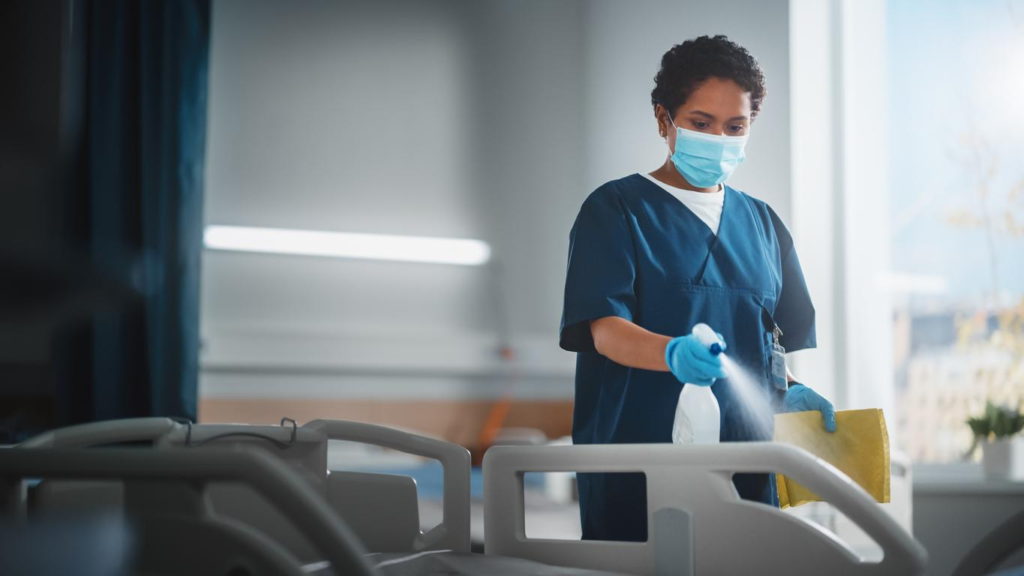
If you run or manage a medical facility in the UK, you already know that the Care Quality Commission takes cleanliness seriously.
CQC inspectors do not just check whether a clinic looks tidy. They assess whether infection control procedures are in place, whether cleaning records are kept properly, and whether the environment genuinely protects patients, staff, and visitors from harm.
Falling short of CQC cleaning standards is not just an administrative problem. It puts vulnerable people at risk and can result in enforcement action, poor ratings, and lasting damage to your reputation.
In this guide, we explain what CQC cleaning standards actually require, which areas of a medical facility are most closely scrutinised, and how professional healthcare cleaning services help you stay compliant — not just at inspection time, but every single day.
What Is the CQC and Why Does Cleaning Matter?
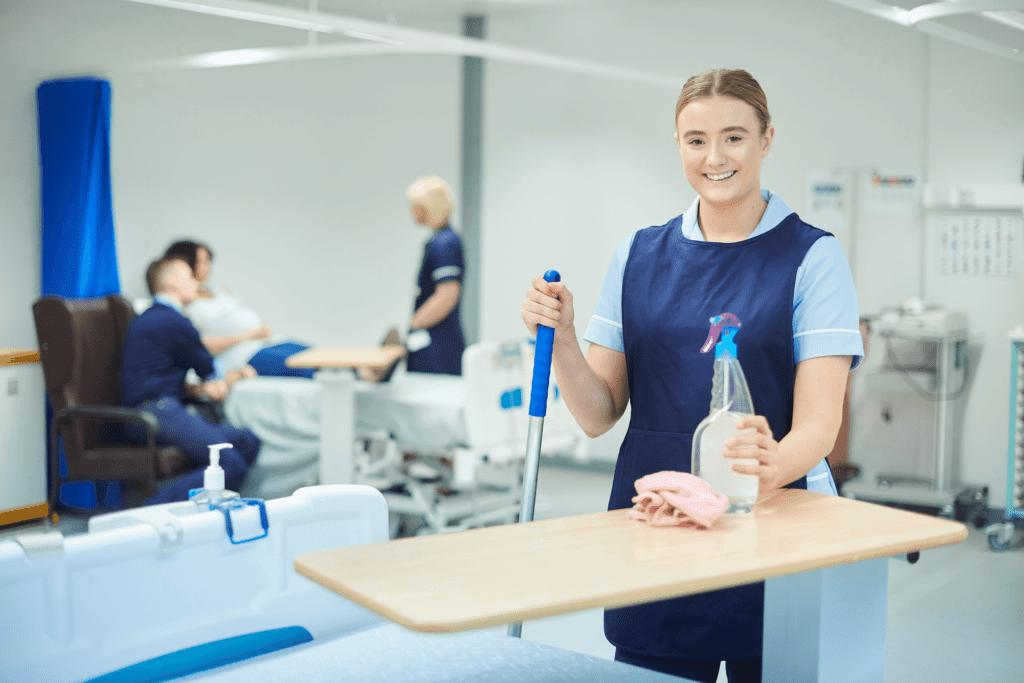
The Care Quality Commission is the independent regulator of health and social care in England. It monitors, inspects, and regulates hospitals, GP surgeries, dental practices, care homes, clinics, and other healthcare providers to make sure they meet fundamental standards of quality and safety.
Cleanliness sits at the heart of CQC compliance. This is because healthcare environments carry a unique risk — Healthcare Associated Infections, or HCAIs.
HCAIs are infections that patients pick up during the course of receiving care. They include conditions such as MRSA, C. difficile, and norovirus. These infections can be serious — particularly for patients who are already unwell or immunocompromised.
The single most effective way to prevent HCAIs is rigorous, consistent cleaning and infection control. This is why the CQC pays such close attention to cleaning standards when it inspects a facility.
The Legal and Regulatory Framework
CQC inspections are underpinned by a clear legal framework. Understanding this framework helps you see why cleaning standards are treated with such seriousness.
The Health and Social Care Act 2008
The Health and Social Care Act 2008 (Regulated Activities) Regulations 2014 set out the fundamental standards that all CQC-registered providers must meet. Regulation 12 — Safe Care and Treatment — requires providers to assess and mitigate risks to patients, including the risk of infection.
This means that infection control — including cleaning — is not optional. It is a legal requirement.
The Code of Practice on the Prevention and Control of Infections
The Department of Health’s Code of Practice on the Prevention and Control of Infections provides detailed guidance on how healthcare providers should manage infection risk. It covers policies, procedures, training, monitoring, and — crucially — cleaning standards.
Healthcare providers are expected to have a written cleaning policy, a cleaning schedule, and documented evidence that cleaning is being carried out to the required standard.
NHS Cleanliness Standards (PLACE)
For NHS facilities, the Patient-Led Assessments of the Care Environment (PLACE) programme provides an annual assessment of cleanliness, food, privacy, dignity, and the condition of buildings. PLACE scores are published publicly and feed into the overall picture of a facility’s standards.
Even for independent and private healthcare providers not subject to PLACE, the standards it sets provide a useful benchmark for what good looks like.
At Xpect Group, our healthcare and medical cleaning services are designed and delivered in full alignment with these regulatory requirements.
What CQC Inspectors Look For
When a CQC inspector visits a medical facility, they are assessing whether the environment is safe and whether robust systems are in place to keep it that way.
Here are the specific things they look for when it comes to cleaning and infection control.
Cleaning Policies and Procedures
Inspectors will ask to see your cleaning policy. This should be a written document that sets out how cleaning is managed in your facility — what products are used, how often different areas are cleaned, who is responsible, and how standards are monitored.
If you cannot produce a cleaning policy, or if your policy does not reflect what is actually happening on the ground, that is a red flag for inspectors.
Cleaning Schedules and Records
A cleaning policy on its own is not enough. Inspectors want to see evidence that cleaning is actually taking place as planned.
This means cleaning schedules — which areas are cleaned, how often, and to what standard — and cleaning records, which provide a log that cleaning tasks have been completed. These records must be kept up to date and must be available for inspection at any time.
Staff Training in Infection Control
Inspectors will ask whether cleaning staff have received training in infection control. This includes understanding how infections spread, the correct use of personal protective equipment (PPE), proper hand hygiene, and the correct use of cleaning products and disinfectants.
Untrained cleaning staff in a medical environment are a genuine infection risk. This is why healthcare cleaning is a specialist field — not a job for a general cleaning contractor without relevant experience.
Segregation and Colour-Coding
In medical facilities, different coloured cleaning equipment must be used in different areas to prevent cross-contamination. For example, equipment used to clean toilets must never be used to clean clinical areas.
The National Colour-Coding System for cleaning materials in healthcare uses a standard set of colours — red for washrooms and toilets, yellow for clinical areas, blue for general areas, and green for catering. Inspectors will check that this system is in use and that staff understand it.
Decontamination of Equipment
Medical equipment that comes into contact with patients must be decontaminated properly between uses. This goes beyond standard surface cleaning and requires specific products and procedures.
Inspectors will check that decontamination processes are in place, documented, and followed consistently.
Waste Management
Clinical waste — including sharps, contaminated dressings, and other materials — must be handled, stored, and disposed of in accordance with specific regulations. Inspectors will check that waste segregation is correct and that clinical waste is not mixing with general waste.
Our healthcare and medical cleaning services cover all of these areas, giving you confidence that your facility is cleaned and managed to the standard CQC inspectors expect.
The Areas Most Closely Scrutinised in Medical Facilities
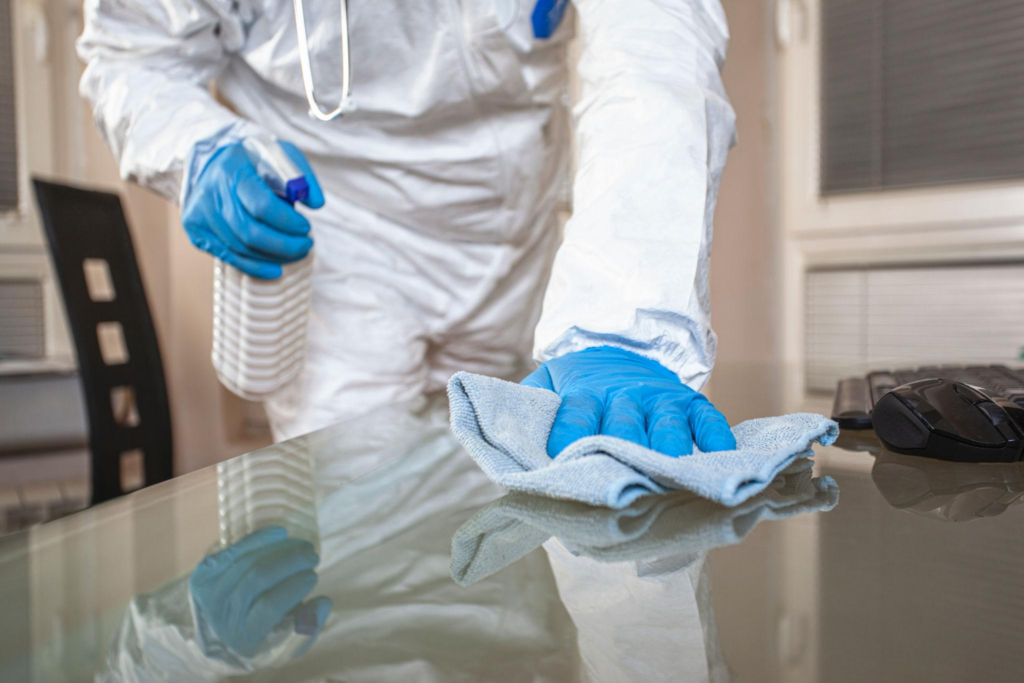
Every area of a medical facility carries some level of infection risk. But certain spaces demand the highest level of attention.
Clinical Treatment Rooms and Examination Areas
These are the spaces where patient care takes place. Surfaces that come into contact with patients — examination couches, trolleys, equipment — must be thoroughly cleaned and disinfected between every patient.
This is not a once-a-day task. It is a continuous process throughout the working day.
Washrooms and Toilets
Patient-facing washrooms are a critical infection control point. They must be cleaned frequently throughout the day — not just at the start and end of a shift — and stocked consistently with soap, paper towels, and hand sanitiser.
Hand hygiene is one of the most effective ways to prevent infection spread. If your washrooms do not support it, your infection control is compromised.
Waiting Areas
Waiting rooms are used by people who are often unwell. Chairs, tables, magazines, door handles, and reception desks are touched repeatedly by patients who may be carrying infections.
Regular cleaning and disinfection of waiting areas — including high-touch surfaces throughout the day — is essential to reduce the risk of cross-infection between patients.
Floors and High-Touch Surfaces
Floors in medical facilities must be cleaned with appropriate products that kill pathogens without leaving residues that could be harmful. Hard floors must be maintained to a standard that prevents them from harbouring bacteria in scratches or joins.
High-touch surfaces — door handles, light switches, handrails, lift buttons — must be disinfected regularly throughout the day. These are the surfaces that carry the highest transfer risk.
Staff Areas and Rest Rooms
Staff areas are sometimes overlooked in cleaning plans. But staff who eat lunch in a poorly cleaned break room and then return to patient-facing roles carry contamination risk with them.
Staff rooms, lockers, and rest areas must be included in your cleaning schedule and maintained to the same standard as other areas of the facility.
Common Reasons Medical Facilities Fail CQC Inspections on Cleanliness
Understanding where things go wrong helps you make sure they do not go wrong for you.
Incomplete or outdated cleaning records. Records that are missing, incomplete, or clearly not reflective of actual practice are a significant concern for inspectors. Your records must be accurate and current.
Untrained cleaning staff. Cleaners without proper infection control training are a liability in a medical environment. Training must be documented and kept up to date.
Incorrect colour-coding. Using the wrong colour equipment in the wrong area — or having equipment that is damaged, old, or not replaced regularly enough — is a straightforward compliance failure.
Inadequate frequency. Cleaning once a day in a busy clinic or surgery is not sufficient. High-risk areas and high-touch surfaces need attention multiple times throughout the working day.
Poor audit trail. CQC inspectors want to see that management is monitoring cleaning standards — not just that cleaning is taking place. Regular audits, spot checks, and documented quality reviews demonstrate that your system has oversight built into it.
Using a non-specialist cleaning provider. General commercial cleaning contractors without healthcare-specific experience and training are not equipped to meet CQC requirements. Healthcare cleaning is a specialist discipline.
Why Specialist Healthcare Cleaning Matters
This last point is worth dwelling on.
Not every cleaning company is equipped to work in a medical environment. Healthcare cleaning requires specific knowledge, specific products, and specific training that goes well beyond what is needed for an office or retail clean.
At Xpect Group, our healthcare cleaning operatives are trained in:
- Infection prevention and control principles
- The National Colour-Coding System for cleaning equipment
- Correct use and dilution of hospital-grade disinfectants
- Personal protective equipment (PPE) use and disposal
- Clinical waste segregation and handling
- Completion of cleaning records and audit documentation
This training makes a genuine difference. It means that when one of our team is cleaning a GP surgery or medical clinic, they are not just making it look clean. They are actively reducing infection risk and supporting your CQC compliance.
Building a CQC-Compliant Cleaning Programme
If you want to be confident that your cleaning standards will hold up under CQC scrutiny, your programme needs to cover the following.
A written cleaning policy that sets out your approach, the products used, responsibilities, and how standards are monitored. This document should be reviewed and updated regularly.
A detailed cleaning schedule that specifies every area of the facility, how often it is cleaned, what method and products are used, and what standard it must meet.
Accurate, up-to-date cleaning records that provide an auditable trail of what was cleaned, when, and by whom.
Staff training records showing that all cleaning operatives have received appropriate infection control training and that this training is kept current.
A colour-coded equipment system that is in use throughout the facility and understood by all cleaning staff.
Regular audits carried out by a manager or supervisor to check that standards are being maintained and that any issues are identified and addressed quickly.
A clinical waste management procedure that covers segregation, storage, collection, and disposal in line with current regulations.
Working with a specialist cleaning contractor who understands CQC requirements makes all of this significantly easier to achieve and maintain.
Xpect Group: Specialist Healthcare Cleaning Across London and the South East
At Xpect Group, we provide specialist healthcare and medical cleaning services to medical facilities across London and the surrounding areas.
We understand CQC requirements. We train our staff to the standard healthcare environments demand. And we work with our clients to build cleaning programmes that deliver compliance — not just at inspection time, but consistently, every single day.
Our relevant services for healthcare and medical facilities include:
- Healthcare and medical cleaning for GP surgeries, clinics, and specialist practices
- Pharmaceutical cleaning for regulated pharmaceutical and laboratory environments
- Office cleaning for healthcare administration areas and back-of-house spaces
- School cleaning for educational settings with medical or SEND needs
Ready to Strengthen Your Healthcare Cleaning Standards?
Whether you are preparing for a CQC inspection, reviewing your current cleaning programme, or looking for a specialist healthcare cleaning contractor, Xpect Group can help.
Contact us today for a free consultation and find out how we can support your facility in meeting and maintaining the cleaning standards that keep your patients, staff, and CQC rating safe.
