
When a guest walks into your hotel, restaurant, or venue, they make a judgement within seconds.
They notice the smell. They notice the floors. They notice whether the surfaces look clean and whether the space feels fresh. Before they have even spoken to a member of staff, your cleaning standards have already made an impression.
In the hospitality industry, cleanliness is not just about appearances. It directly affects guest safety, health, and the reviews they leave when they go home.
In this guide, we cover the hospitality cleaning standards UK venues need to meet, what guests actually expect, and how professional cleaning services help you deliver on both.
Why Cleaning Standards Matter So Much in Hospitality
The hospitality sector is one of the most scrutinised industries when it comes to hygiene. And rightly so.
Hotels, restaurants, pubs, and event venues handle large volumes of people every single day. Guests sleep in your beds, eat your food, use your bathrooms, and touch countless surfaces that hundreds of others have touched before them.
If your cleaning standards slip, the consequences are serious. A guest who picks up an infection during their stay will not keep it to themselves. A single poor review mentioning dirty rooms or unhygienic toilets can put off dozens of potential bookings.
On the flip side, a venue that consistently delivers high cleaning standards builds genuine loyalty. Guests return. They recommend you. They trust you.
Cleanliness in hospitality is not a background task. It is a core part of the guest experience — and one of the areas where professional cleaning services make a measurable difference.
Key Hospitality Cleaning Standards in the UK
UK hospitality venues are expected to follow a range of standards that cover both legal requirements and industry best practice.
Food Hygiene Regulations
If your venue serves food — whether that is a hotel restaurant, a pub kitchen, or a catered event space — you are legally required to comply with UK food hygiene law. This falls under the Food Safety Act 1990 and associated regulations, overseen by the Food Standards Agency (FSA).
This means:
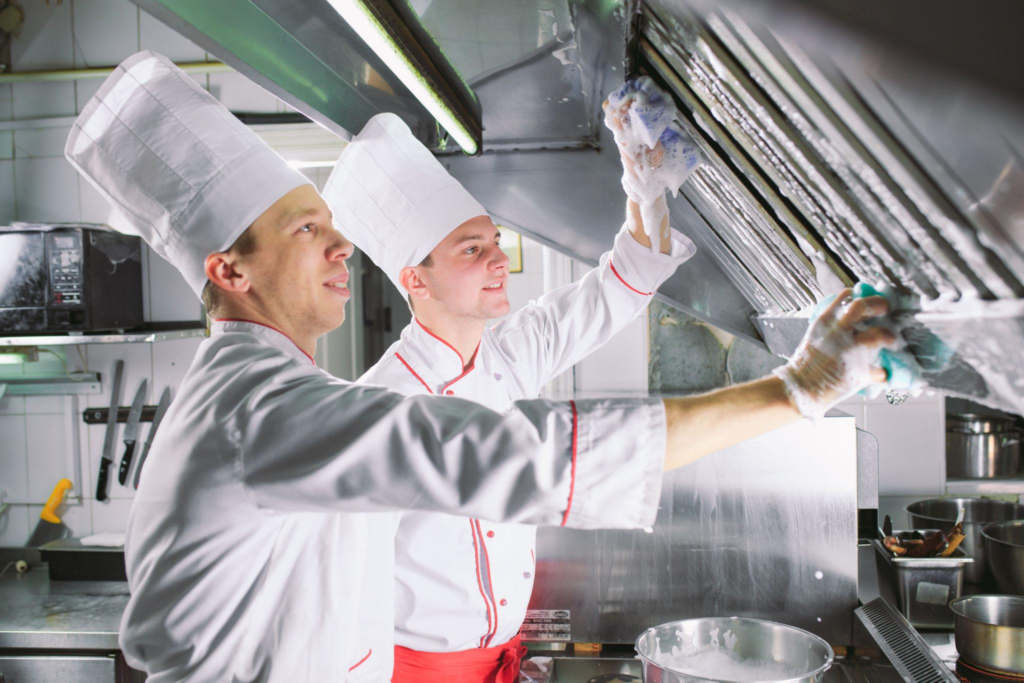
- Kitchen surfaces, equipment, and utensils must be cleaned and sanitised regularly
- Food preparation areas must be free from contamination risk
- Pest control must be in place
- Records of cleaning schedules must be kept and available for inspection
A food hygiene rating of 3 or above is expected by most guests. Anything below that is visible on the FSA website and can seriously damage bookings.
Our hotel and hospitality cleaning services include thorough kitchen and food preparation area cleaning that supports compliance with food hygiene requirements.
Health and Safety at Work
Under the Health and Safety at Work Act 1974, employers — including hospitality businesses — have a legal duty to provide a safe environment for both staff and guests.
Clean floors that are free from slip hazards, properly maintained washrooms, and surfaces that are regularly disinfected all fall under this duty.
Failing to meet these standards does not just risk guest safety. It creates genuine legal liability for your business.
Fire Safety and Emergency Preparedness
Cleanliness and fire safety are more closely linked than many people realise. Cluttered corridors, grease build-up in kitchens, and poorly maintained equipment all increase fire risk.
Regular deep cleaning — particularly in kitchen extraction systems and hard-to-reach areas — is an important part of keeping a hospitality venue fire-safe and compliant.
General Hygiene Expectations
Beyond formal regulations, guests have high expectations of cleanliness in hospitality settings. These are shaped by experience, online reviews, and industry standards set by organisations such as Visit England and AA Hotel Services.
Key areas guests consistently judge include:
- Bedroom cleanliness, including fresh bedding and dust-free surfaces
- Bathroom hygiene, including limescale-free fixtures and clean grout
- Public area presentation, including lobbies, lifts, and corridors
- Restaurant and bar cleanliness, including tables, menus, and seating
- Washroom facilities, which guests rate as one of the most important hygiene indicators
The Areas That Matter Most to Guests
Not all areas carry equal weight in the eyes of a guest. These are the spaces where cleaning standards have the biggest impact on satisfaction and safety.
Guest Bedrooms
A guest bedroom is a personal space. Guests expect it to feel as clean as — or cleaner than — their own home.
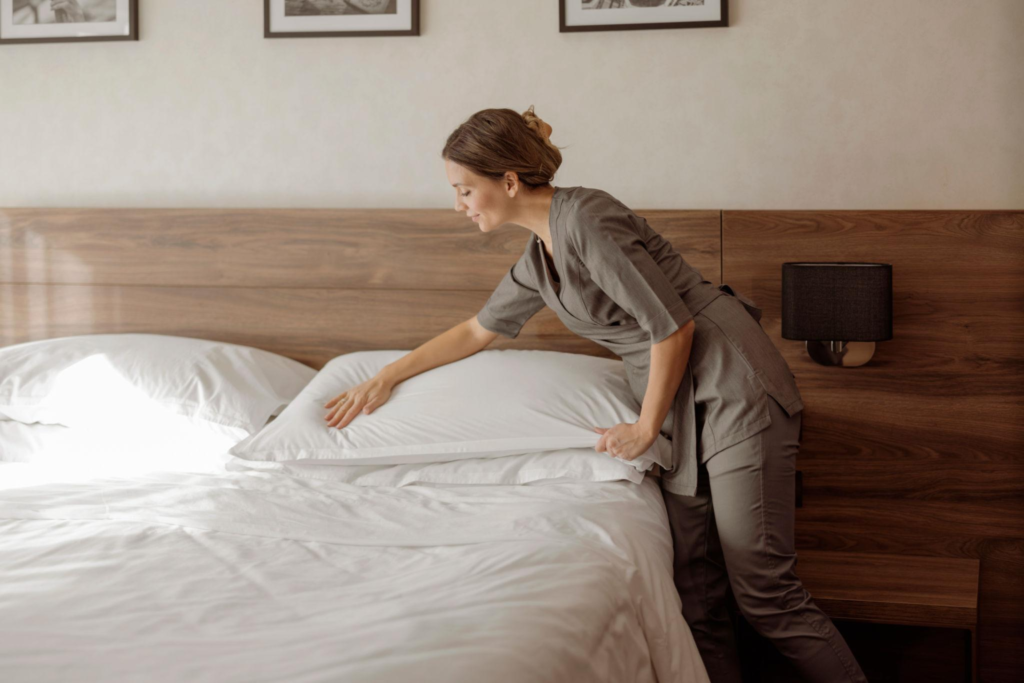
The bed is the centrepiece. Bedding should be fresh for every new guest. Pillows, duvets, and mattress protectors should be laundered regularly. Surfaces — including bedside tables, desks, TV remotes, and light switches — should be wiped down and disinfected between every stay.
High-touch points like door handles and wardrobe handles are often missed in quick turnaround cleans. These are exactly the kinds of spots where bacteria and viruses transfer most easily between guests.
Bathrooms and Washrooms
Bathrooms are the number one area guests inspect and the number one source of negative reviews when standards are not met.
Every surface in a guest bathroom — toilet, sink, bath, shower, taps, and tiles — must be properly cleaned and disinfected between stays. Limescale, soap scum, and mould in grout lines are all signs of inadequate cleaning that guests notice immediately.
Washrooms in public areas such as restaurants and lobbies must be checked and maintained throughout the day. A clean bathroom at 9am that has not been attended to by 1pm is not good enough in a busy venue.
Kitchens and Food Preparation Areas
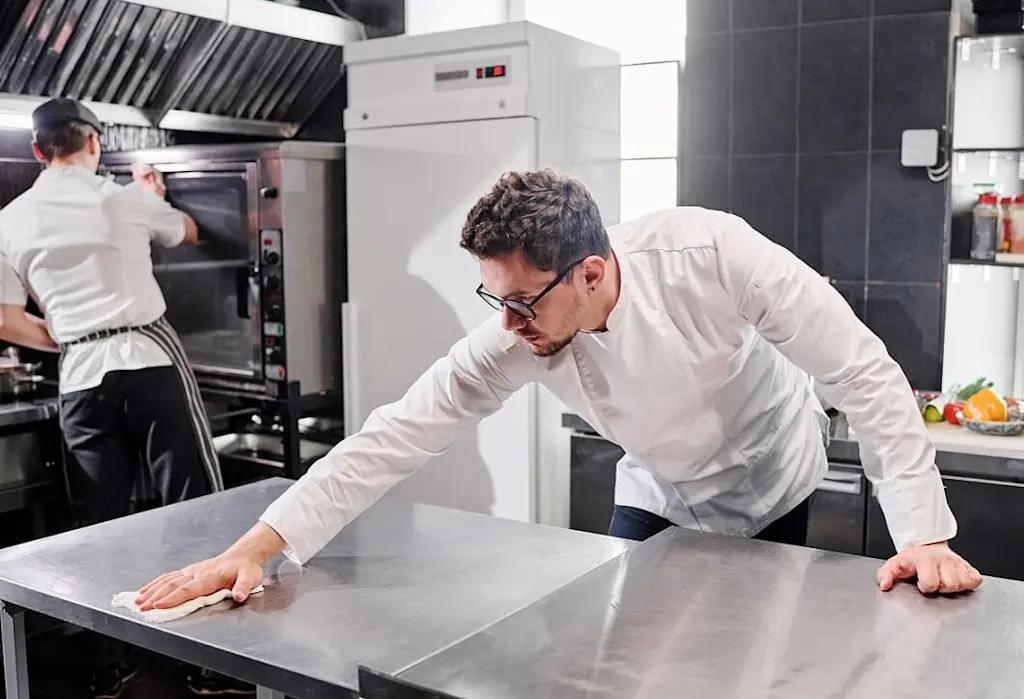
Kitchen hygiene is critical for both legal compliance and guest safety. Food poisoning outbreaks in hospitality venues are rare, but when they happen, the reputational damage is severe.
Kitchen cleaning must go beyond the surfaces that are visible. Deep cleaning of extraction hoods, oven cavities, fridge seals, and floor drains is essential to prevent grease build-up, bacterial growth, and pest attraction.
Our hotel and hospitality cleaning services cover both the daily cleaning of kitchen surfaces and the deep cleaning that keeps your kitchen truly hygienic at every level.
Public Areas and Reception
The lobby, reception desk, lift buttons, stair railings, and seating areas in public spaces are touched by hundreds of people every day. In a post-pandemic world, guests are more aware of high-touch surfaces than ever before.
Regular cleaning and disinfection of these areas throughout the day — not just once in the morning — is now an expected standard in any reputable hospitality venue.
Linen and Soft Furnishings
Bed linen must be changed between every guest stay. This is non-negotiable.
Beyond linen, soft furnishings such as sofas, chairs, curtains, and carpets harbour dust, allergens, and odours that regular surface cleaning does not address. Professional deep cleaning of upholstery and carpets should be carried out on a regular schedule.
Our team provides thorough cleaning across all these areas. If you are looking for a reliable cleaning partner for your hotel or venue, get in touch with Xpect Group to discuss what a tailored cleaning programme would look like for you.
The Role of Professional Cleaning Services in Hospitality
Many hospitality venues rely on in-house housekeeping teams for day-to-day cleaning. This works well for regular turnaround tasks — but it has limits.
Professional commercial cleaning services bring several things that in-house teams often cannot.
Specialist equipment. Professional cleaners have access to industrial-grade equipment for deep cleaning carpets, extraction systems, hard floors, and upholstery. This delivers a level of cleanliness that domestic tools simply cannot match.
Trained operatives. Professional cleaning staff are trained in correct dilution rates, dwell times for disinfectants, and cross-contamination prevention. This knowledge makes a genuine difference to hygiene outcomes.
Consistent standards. In-house teams are subject to staff turnover, sick days, and varying levels of motivation. A professional cleaning contractor delivers consistent results to an agreed standard, every time.
Flexible scheduling. Professional cleaning services can be scheduled around your guests — early mornings, late evenings, or during quiet periods — so cleaning never disrupts the guest experience.
Accountability. With a professional contractor, you have a service agreement, regular quality checks, and a named point of contact. If something is not right, there is a clear process to address it.
At Xpect Group, we work with hotels, restaurants, pubs, event venues, and leisure facilities across London and the South East. Our hotel cleaning services are built around the specific needs of the sector — thorough, discreet, and consistently excellent.
Building a Cleaning Schedule That Works for Hospitality
A good hospitality cleaning programme has three layers.
Daily cleaning covers the tasks that must happen every day — bedroom turnarounds, bathroom cleans, kitchen surface disinfection, public area maintenance, and waste removal. This is the baseline that keeps your venue presentable and safe at all times.
Weekly cleaning goes a step further — mopping and buffing hard floors, deep cleaning bathrooms, cleaning behind furniture, laundering soft furnishings, and attending to areas that daily cleans do not reach.
Periodic deep cleaning addresses the areas that build up over time — kitchen extraction systems, upholstery and carpet deep cleaning, window cleaning, grout and tile treatment, and thorough disinfection of high-touch areas throughout the building.
All three layers need to work together. A venue that does excellent daily cleaning but skips periodic deep cleans will still develop hygiene problems over time. One that deep cleans regularly but cuts corners on daily maintenance will fall short of guest expectations in between.
If you are unsure whether your current cleaning programme covers all three levels properly, our commercial cleaning services team can carry out an assessment and recommend the right approach for your venue.
How Cleanliness Affects Guest Reviews and Revenue
The connection between cleanliness and revenue in hospitality is well established.
Review platforms such as TripAdvisor, Google, and Booking.com show cleanliness as one of the top-rated categories for hotels and restaurants. A drop in cleanliness scores directly correlates with a drop in overall rating — and a drop in bookings.
Guests who have a negative experience related to hygiene are far more likely to leave a review than guests who simply had a pleasant stay. One detailed review describing a dirty bathroom or stained bedding can sit on your listing for years.
By contrast, venues that consistently receive high marks for cleanliness attract more bookings, command higher rates, and build the kind of loyal following that sustains a hospitality business long term.
Investing in professional cleaning is not just a cost — it is a revenue decision.
Xpect Group: Your Hospitality Cleaning Partner
At Xpect Group, we understand the unique demands of the hospitality sector. We know that your guests notice everything, that your reputation depends on consistent standards, and that your cleaning provider needs to work around your guests — not the other way around.
We provide hotel and hospitality cleaning services across London and beyond, covering everything from daily bedroom turnarounds to full deep cleans of kitchens, public areas, and leisure facilities.
We serve businesses across London and surrounding areas including Staines,Watford and Wycombe.
Ready to Raise Your Cleaning Standards?
Your guests expect the best. With the right cleaning partner, delivering it consistently is straightforward.
Contact Xpect Group today for a free quote and find out how we can help your hospitality business deliver the cleaning standards your guests deserve — every single day.